Imagine a place that feels too much like a dream to actually be reality. Picture a large, dreamy lake set amongst the greenest hills and tall forested mountains. Now envision those mountains draped in low-laying clouds that seem too thin to be clouds. A gentle, misty rain falls on the long, long lines of tea leaves. The trees are still bare after the winter season, but there are pops of white flowers and the beginning of cherry blossoms slowly announcing their arrival. Pagodas and temples tower over the lake, as small boats quietly make their way through the water. Time has seemingly stood still, because this isn’t real life. This is a dream, right?
This is West Lake in Hangzhou, China, also known as Xihu. When I first heard of Hangzhou, I was not aware of its vast history and influence on the Chinese empire. I was initially invited to visit Hangzhou back in 2018, but as I was embarking on a 6-week project across Europe at the time, I was unable to make it work. But I immediately did some research and I found myself mesmerized and captivated by numerous images of West Lake. It immediately soared to one of the top spots on my bucket list, and it was the first place I decided to visit for my first adventure in mainland China.
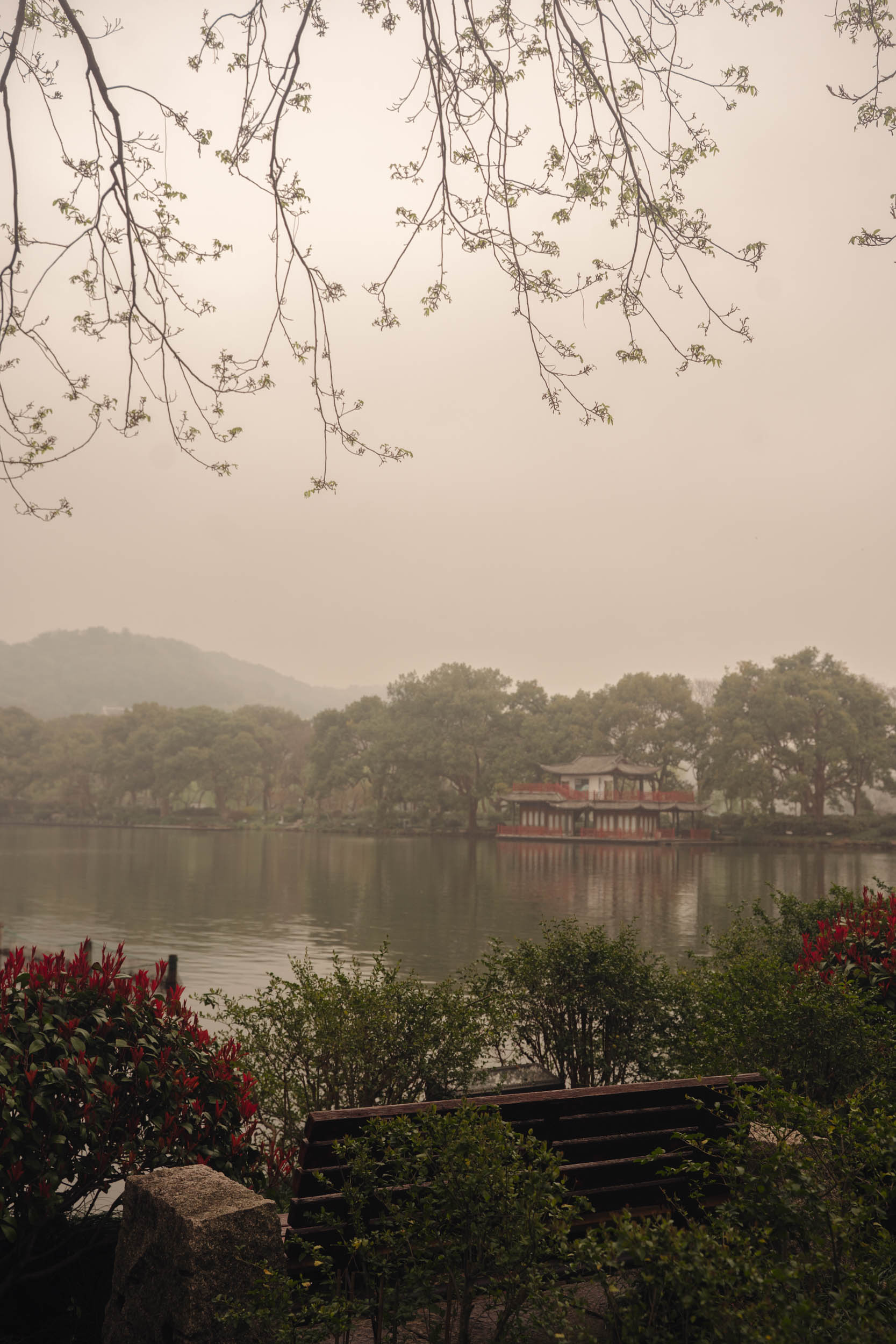
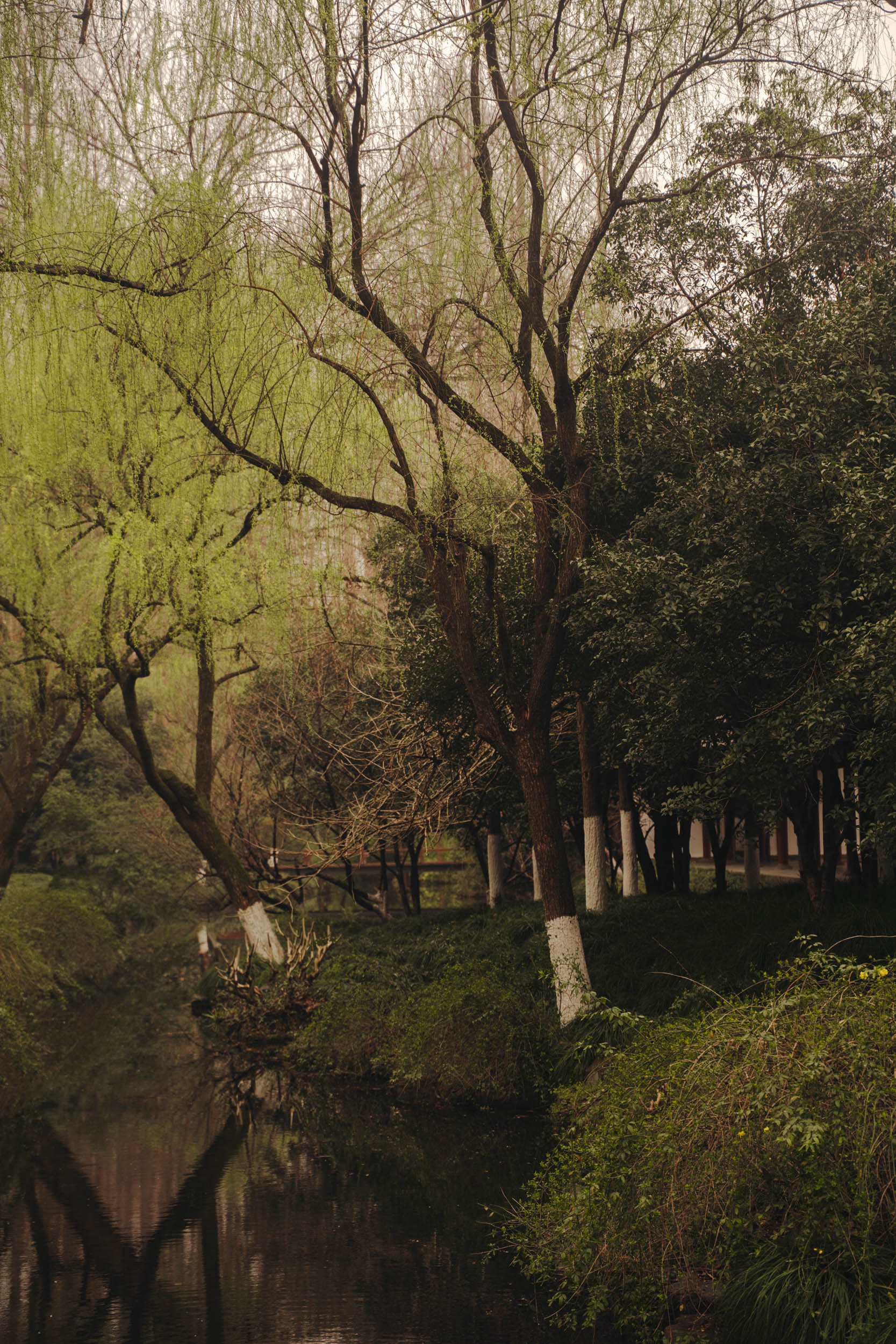
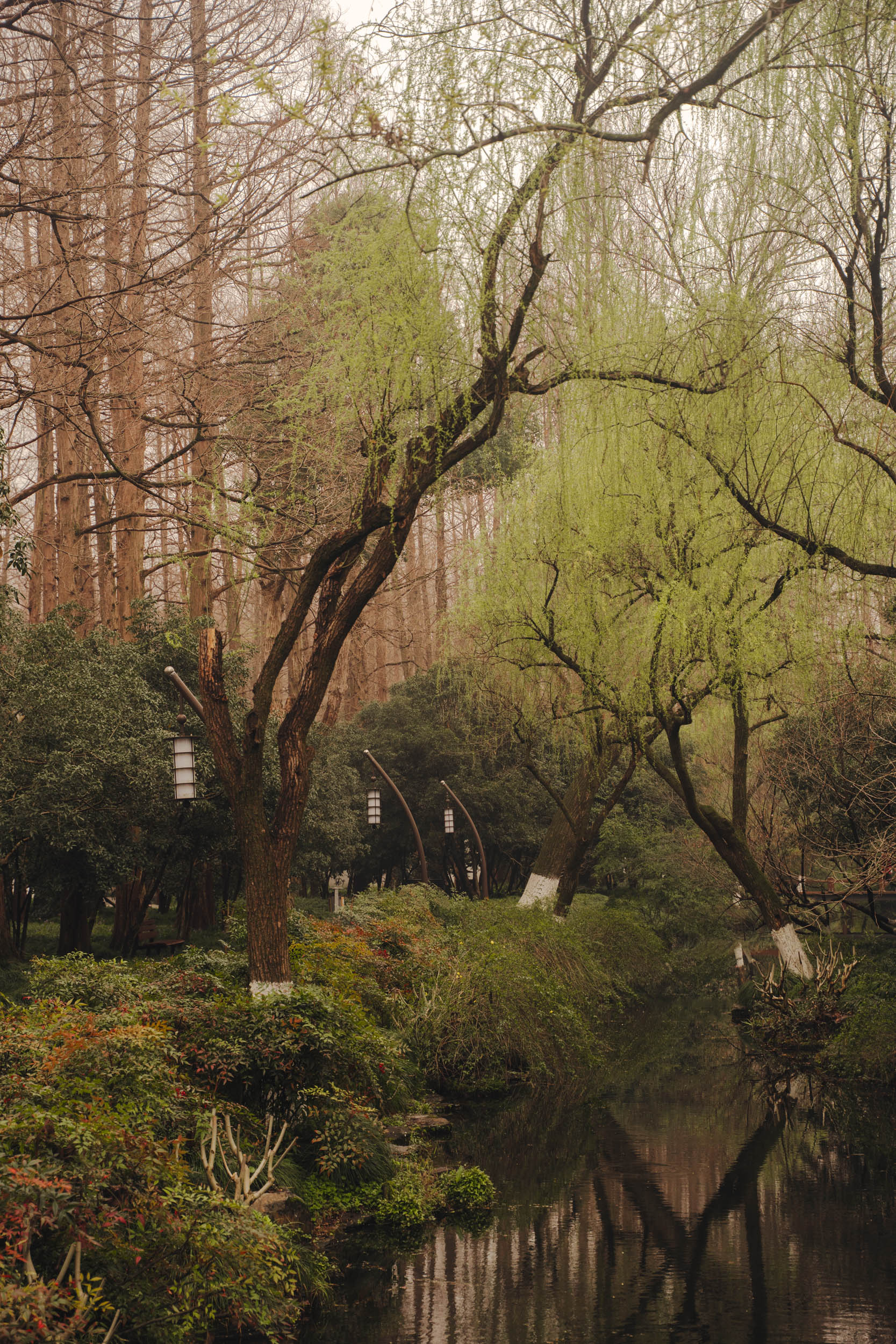
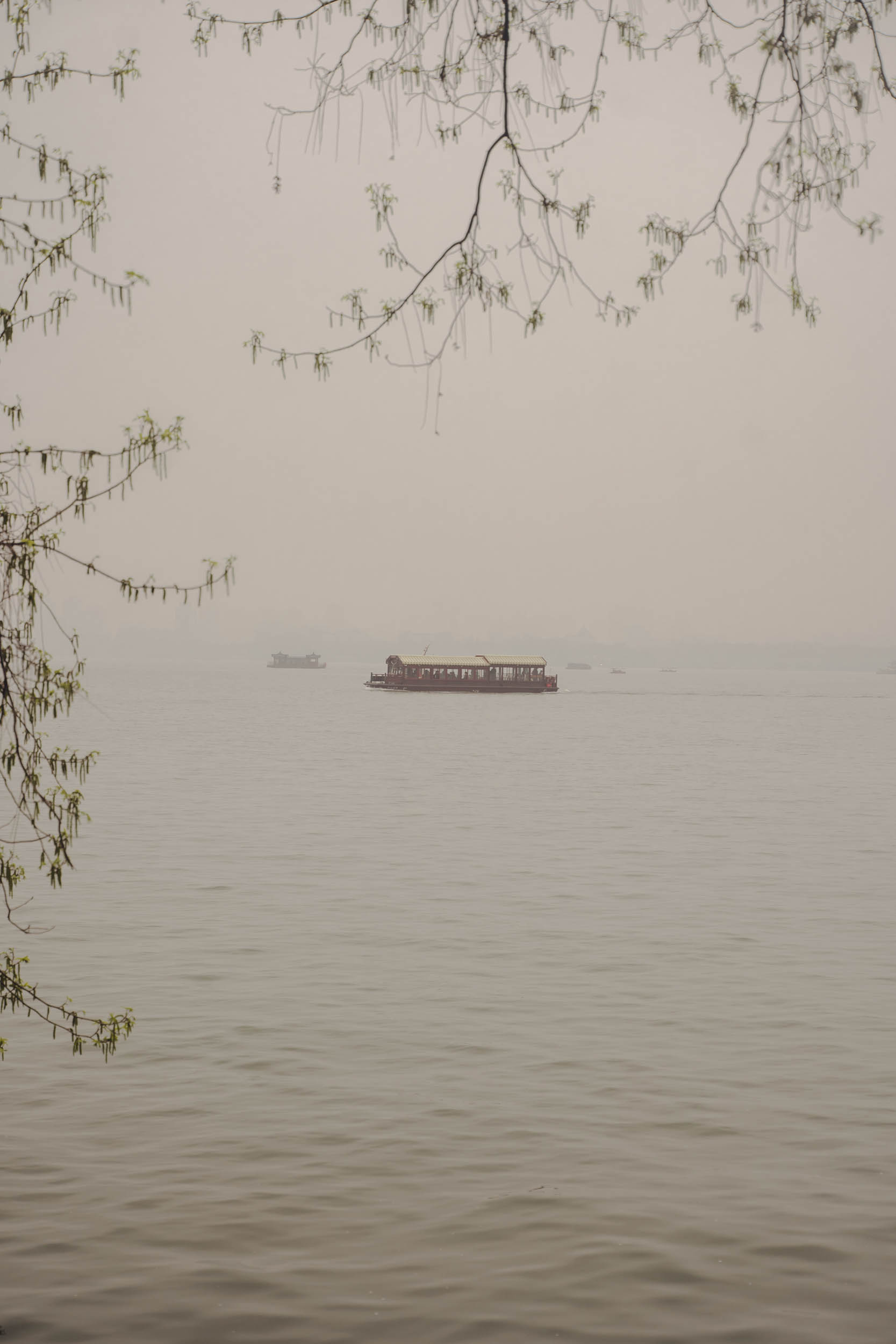
As a child, I was always drawn to literary works and writing. I hated mathematics (still do, even though I know it is essential), I loved science, but my two favorite subjects were literature/writing and history. After completing the necessary classes needed to graduate secondary/high school, I customized my final semester to be all history and writing classes before I graduated early. So when I discovered that Hangzhou not only has a very impressive history as one of the Eight Ancient Capitals of China, my interest was piqued when I learned that West Lake itself has been the birthplace of many popular poems and literary works within China. And once I saw the beautiful bridges and hidden pavilions nestled amongst the trees beside the lake, it was easy to see how this place became a writer’s haven.
I have a genuine interest in Chinese poems, books, and language. Since I am raising my daughter in Hong Kong, and I have officially made Asia my home, I have been eager to learn more about Chinese history. My nightstand is filled with books, both fiction and nonfiction, about different eras and dynasties amongst China’s expansive history. I have also started learning Mandarin by taking Mandarin classes while my daughter is in a Mandarin immersion school. Visiting West Lake felt like an open door into my current interests, getting to step into a bit of history before I immerse myself in learning more.
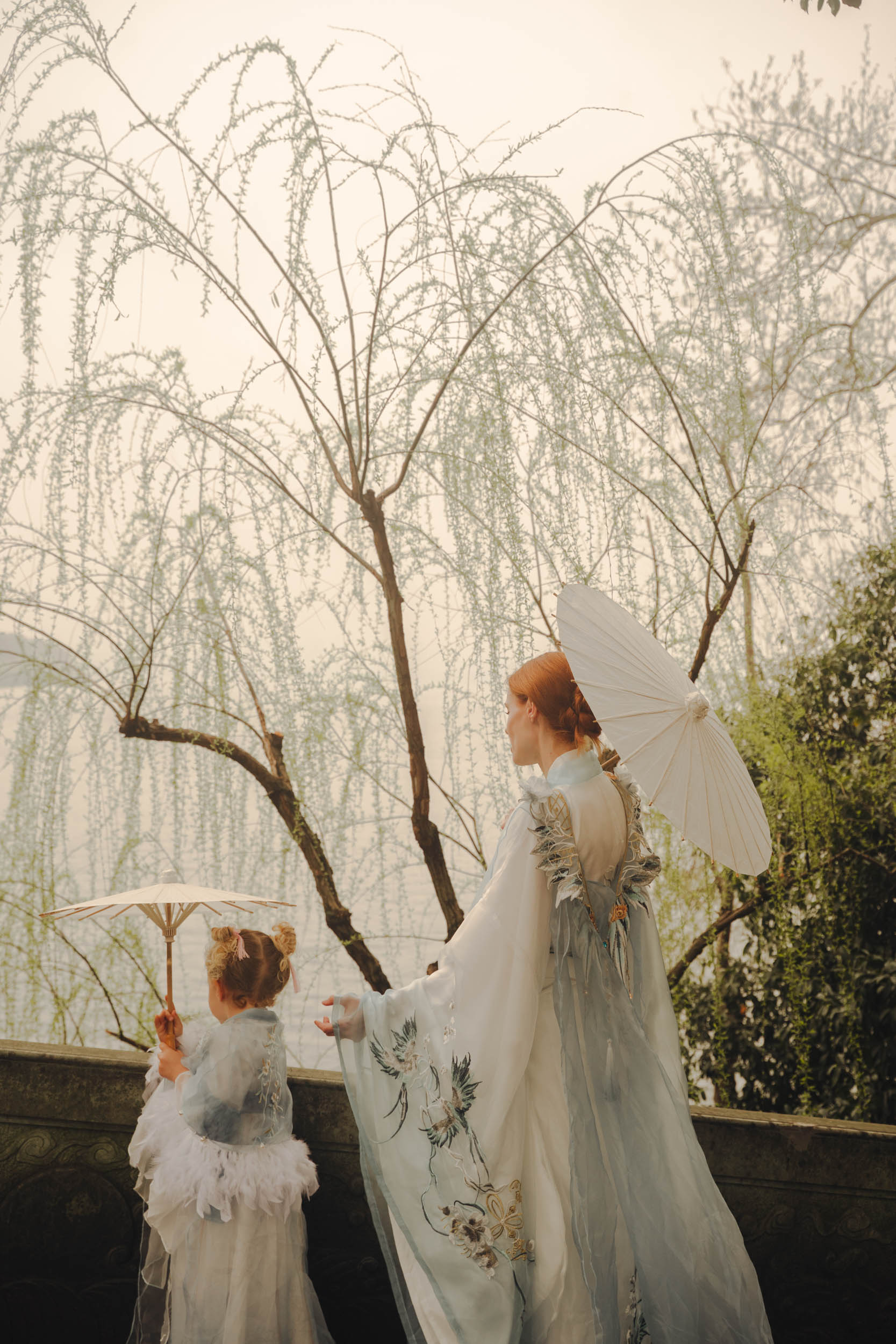
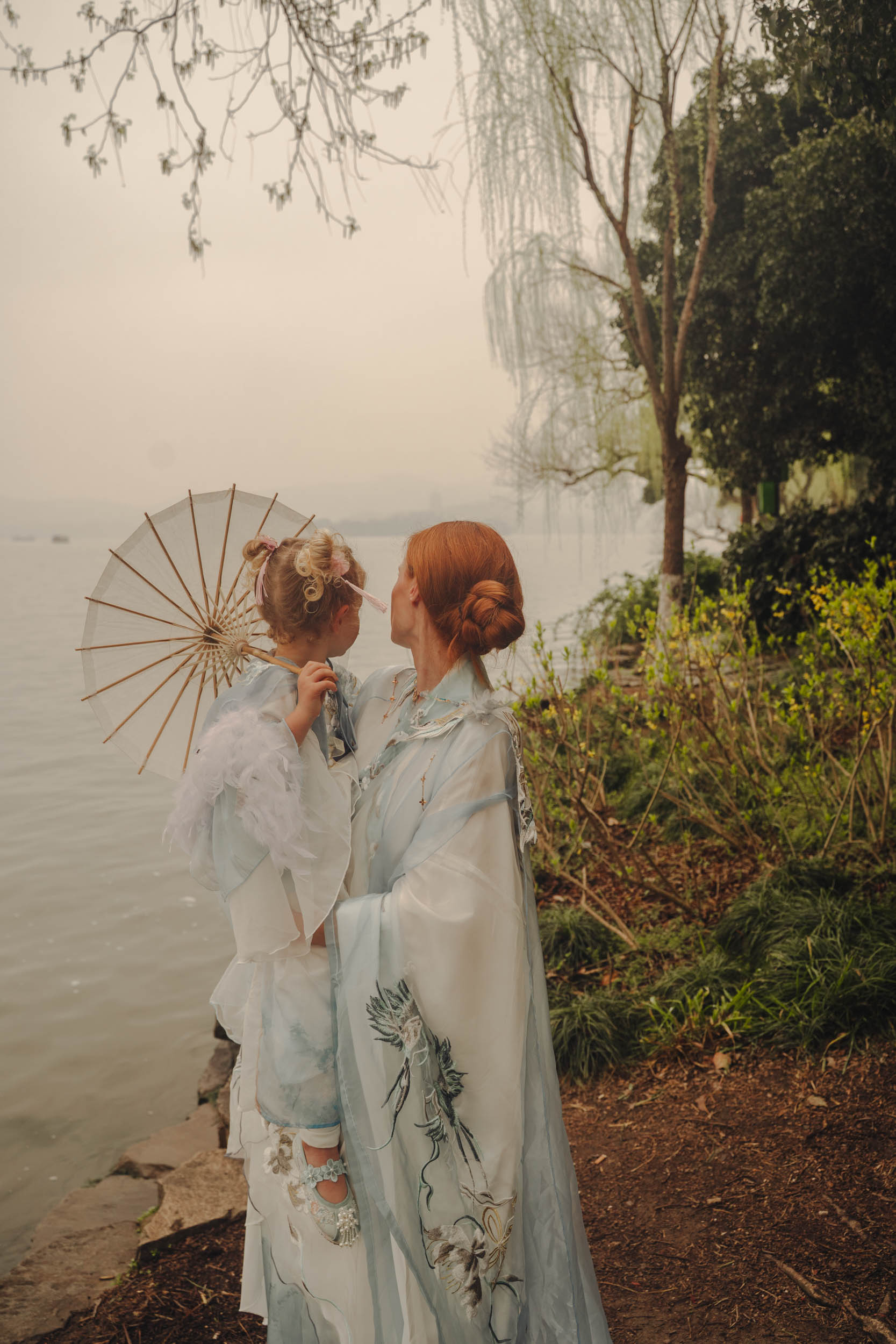
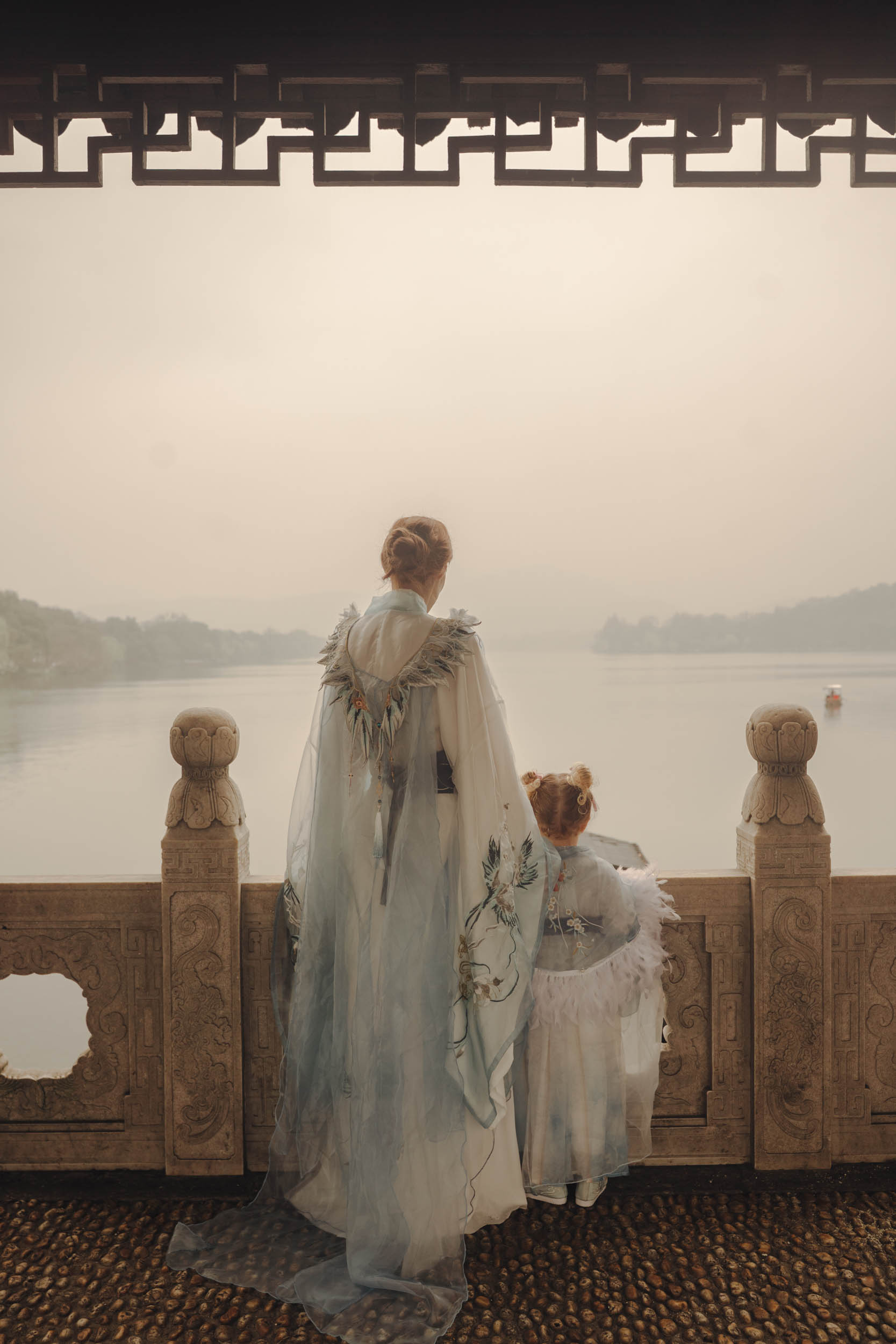
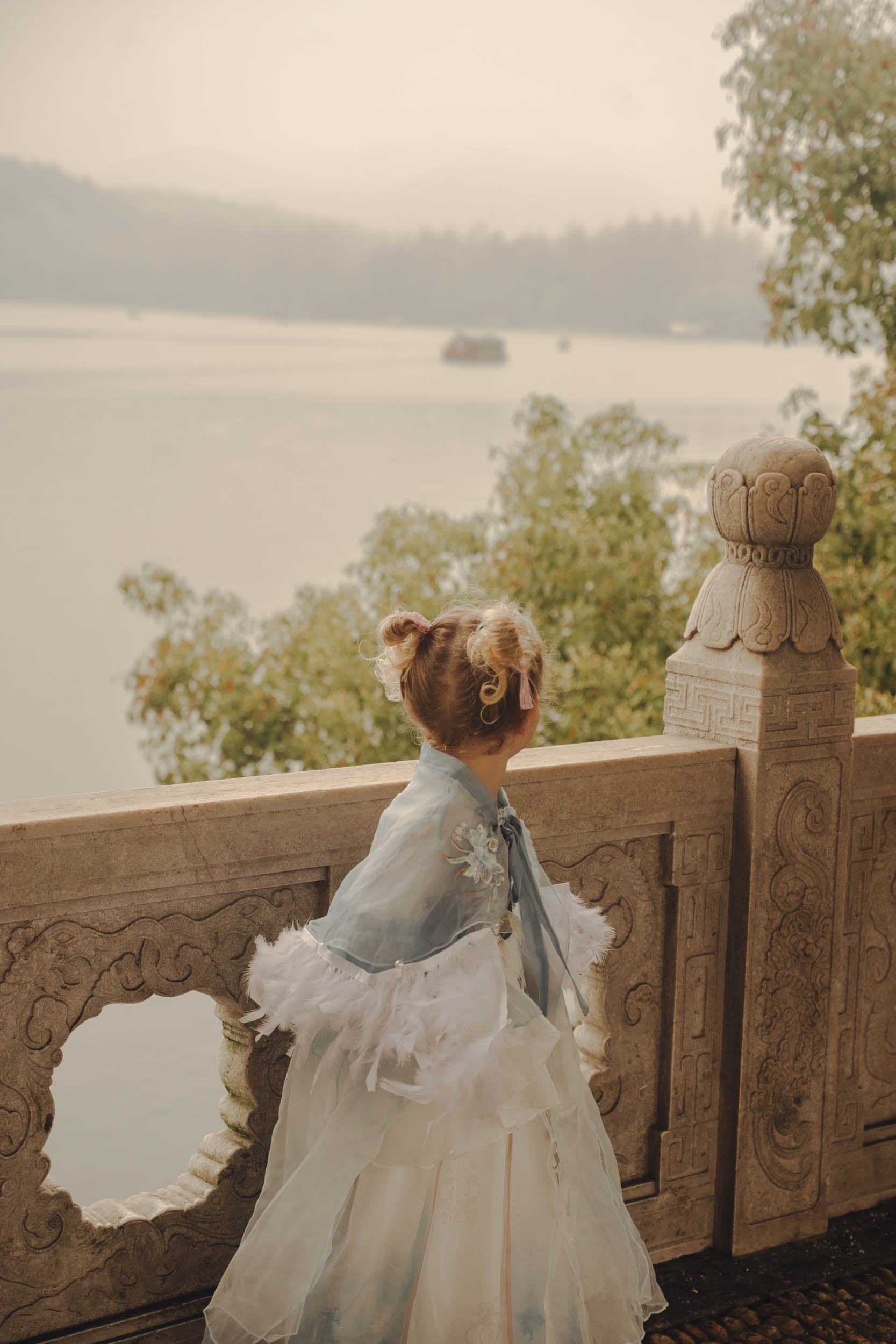
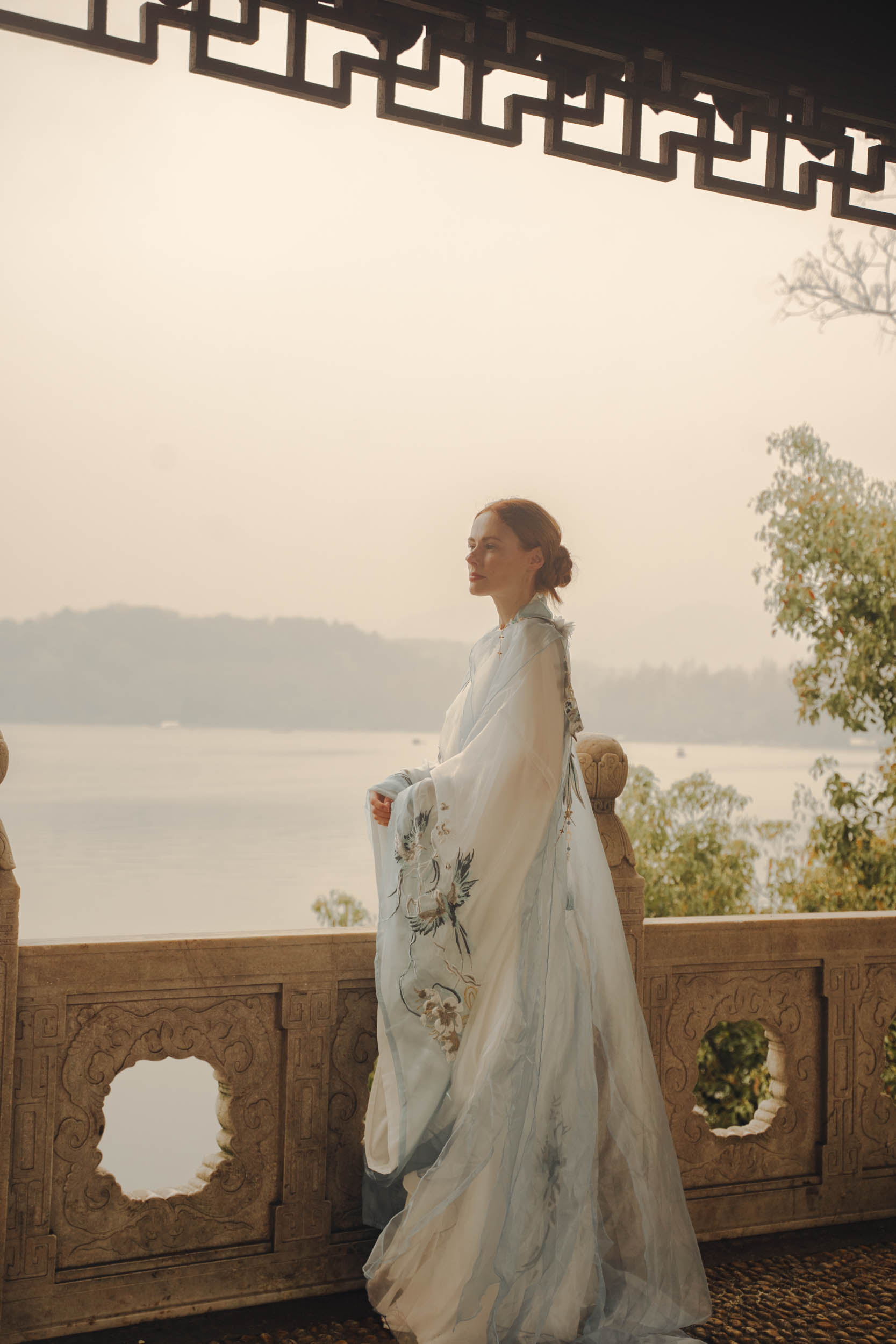
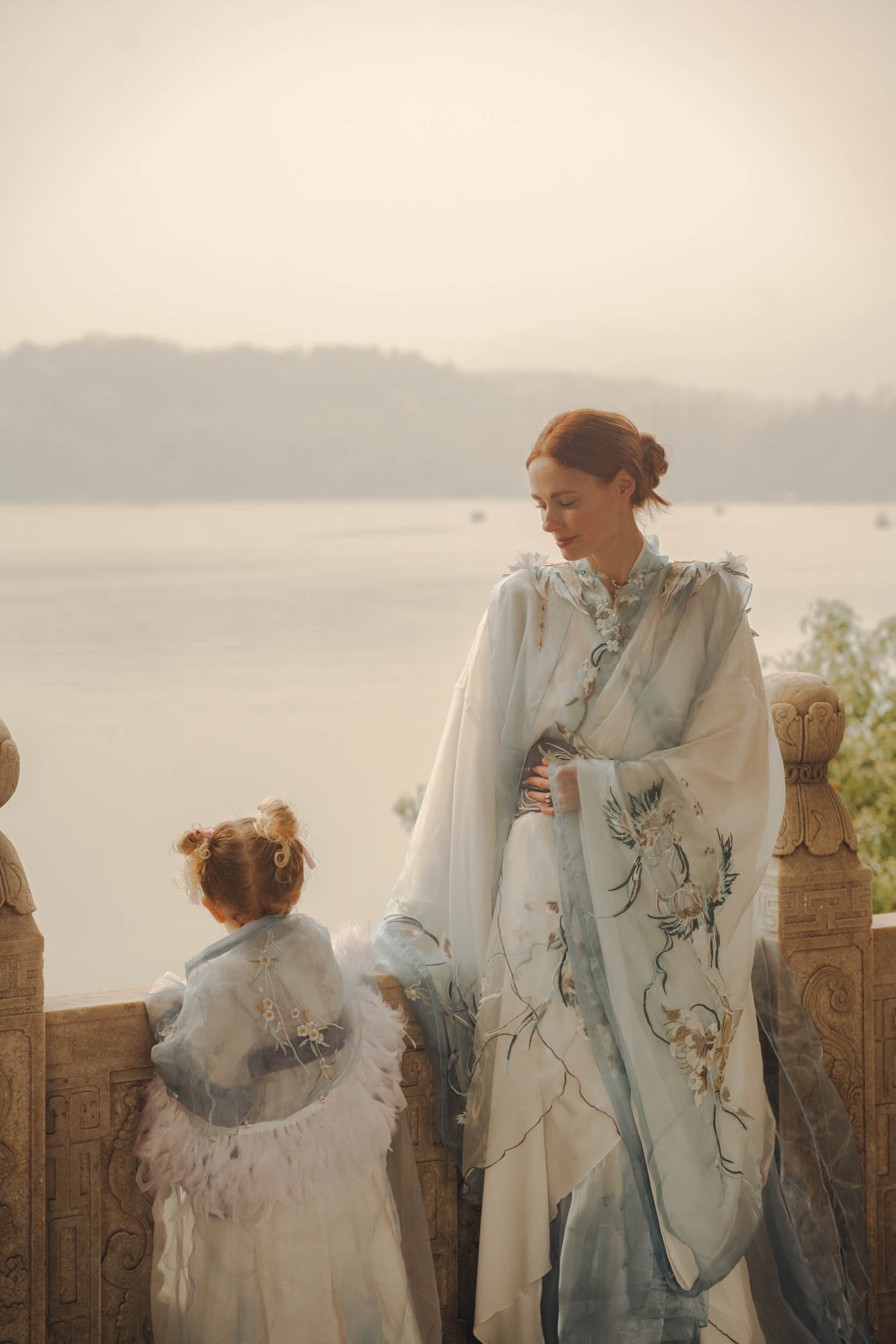
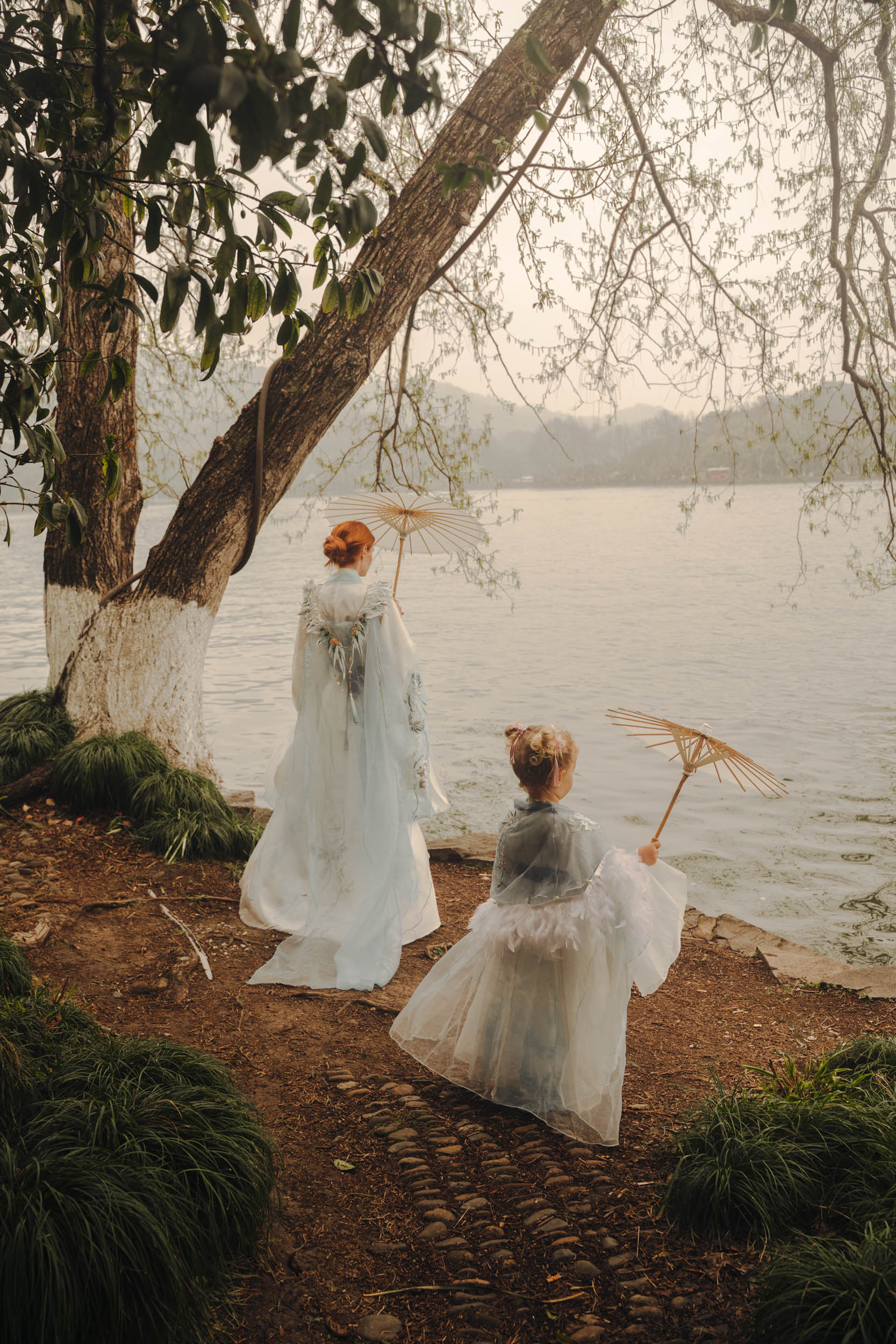
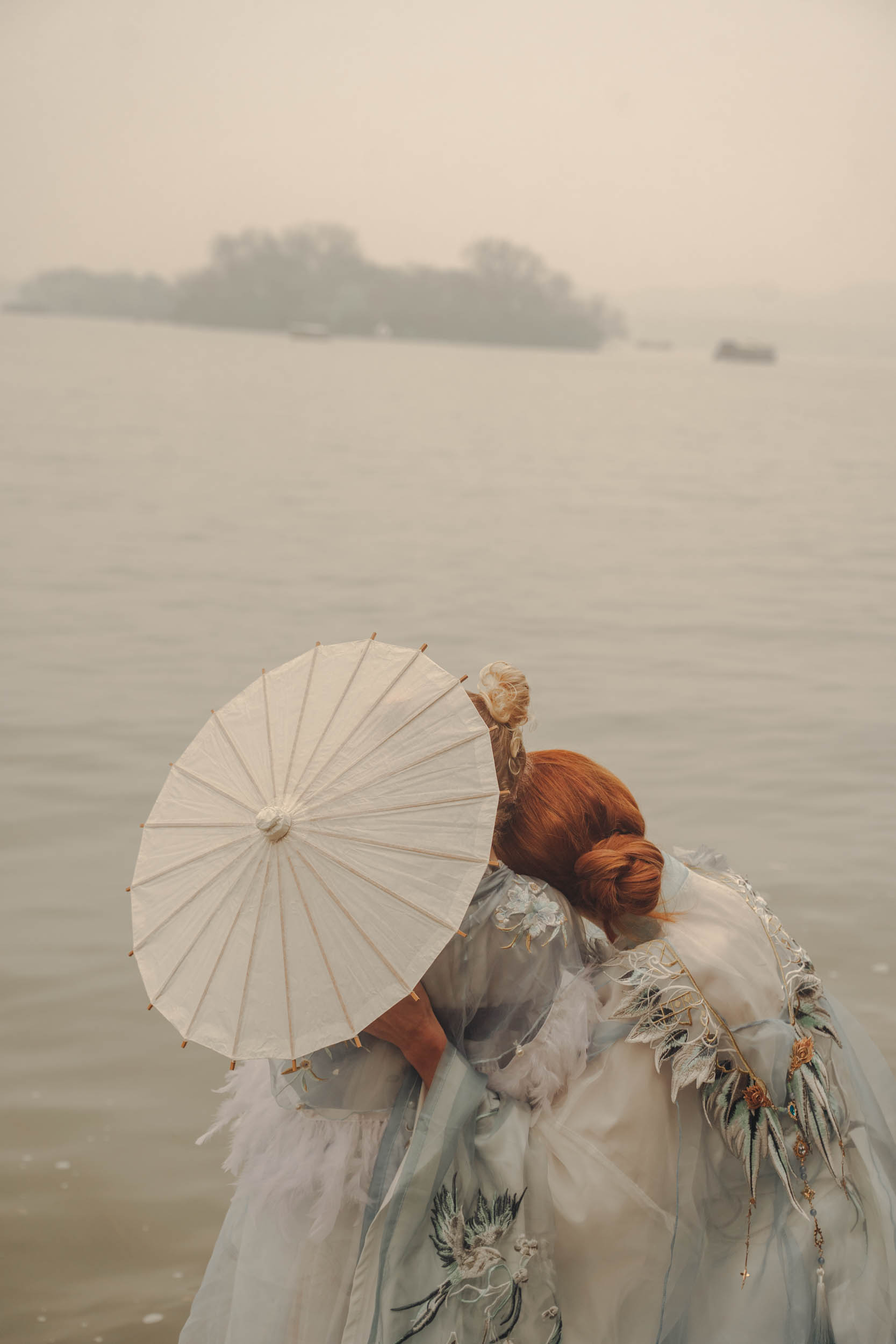
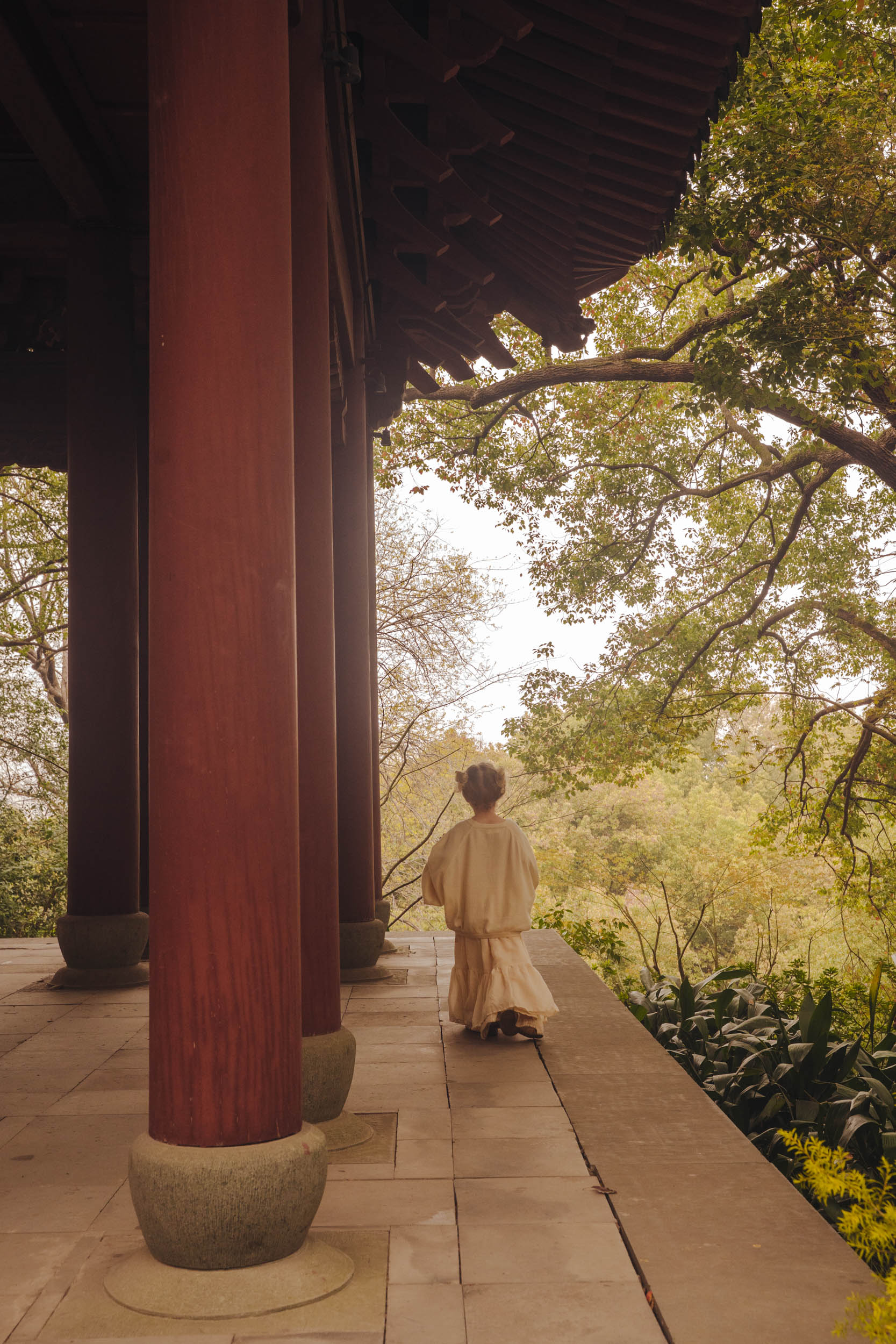
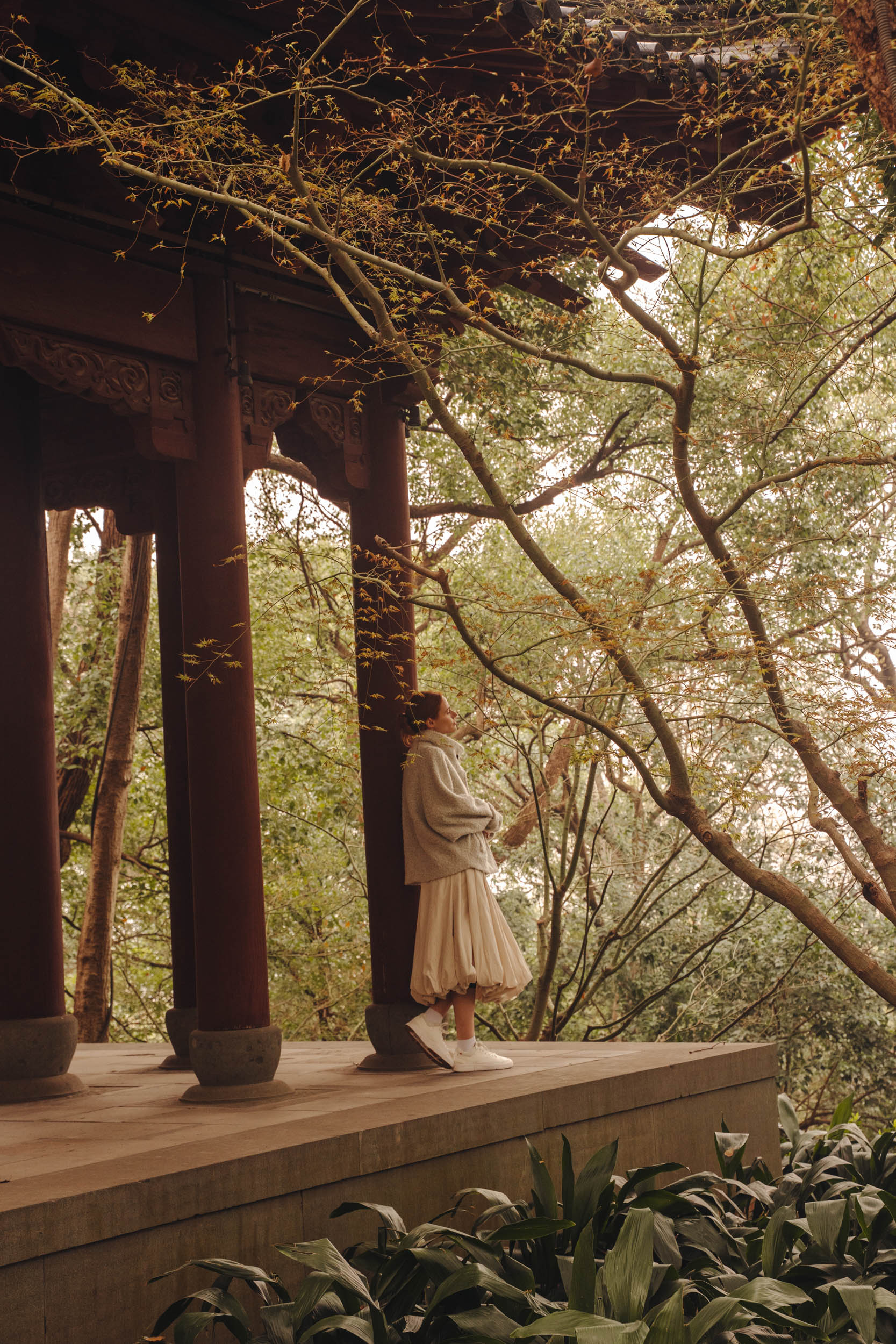
Something that is very common in places like Lijiang, Shanghai, Chengdu, and especially Hangzhou is getting to dress in traditional Chinese clothing. Historical fashion is something I have always been interested in since it combines two of my passions – history and fashion. With West Lake being renowned for its inspiring beauty throughout Chinese history, little bean and I were eager to appreciate the culture by wearing Hanfu dress. Hanfu is the traditional clothing worn by the Han Chinese people, with the latest Hanfu revival movement prominently featuring Hanfu from the pre-Qing dynasty era. It consists of a top (ru), a skirt (qun), a shawl or cape, a robe (pao), and headpieces. The fabrics used in Hanfu were to symbolize status, with silk being the most expensive and symbolizing wealth. Patterns and embroidery were also used to express individuality as well as status.
The Hanfu revival movement began about 20 years ago, and has expanded in popularity even beyond China. However, within China, the movement is particularly meaningful as it’s become a way for people to connect with their ancestors and their culture, as well as showcase national pride. It’s common to see photo shoots occurring throughout the country with people wearing Hanfu, and it’s particularly common to see it in Hangzhou around West Lake. While there are many shops in Hangzhou that offer Hanfu rental plus hair and makeup as well as photography services, we chose to bring our own Hanfu instead. I purchased my Hanfu robes from a woman in Hong Kong, and I purchased little bean’s Hanfu clothing from a shop in China.
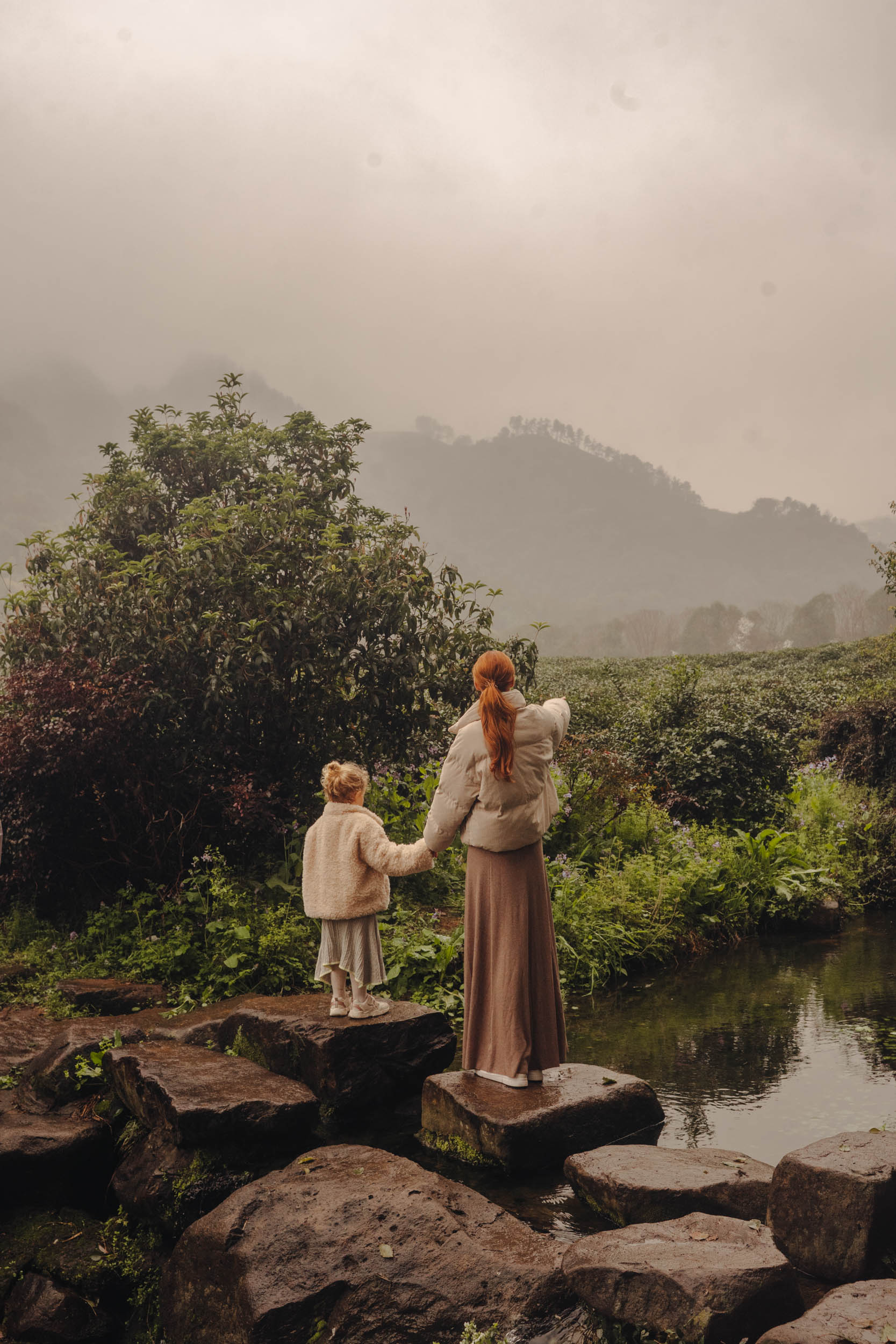
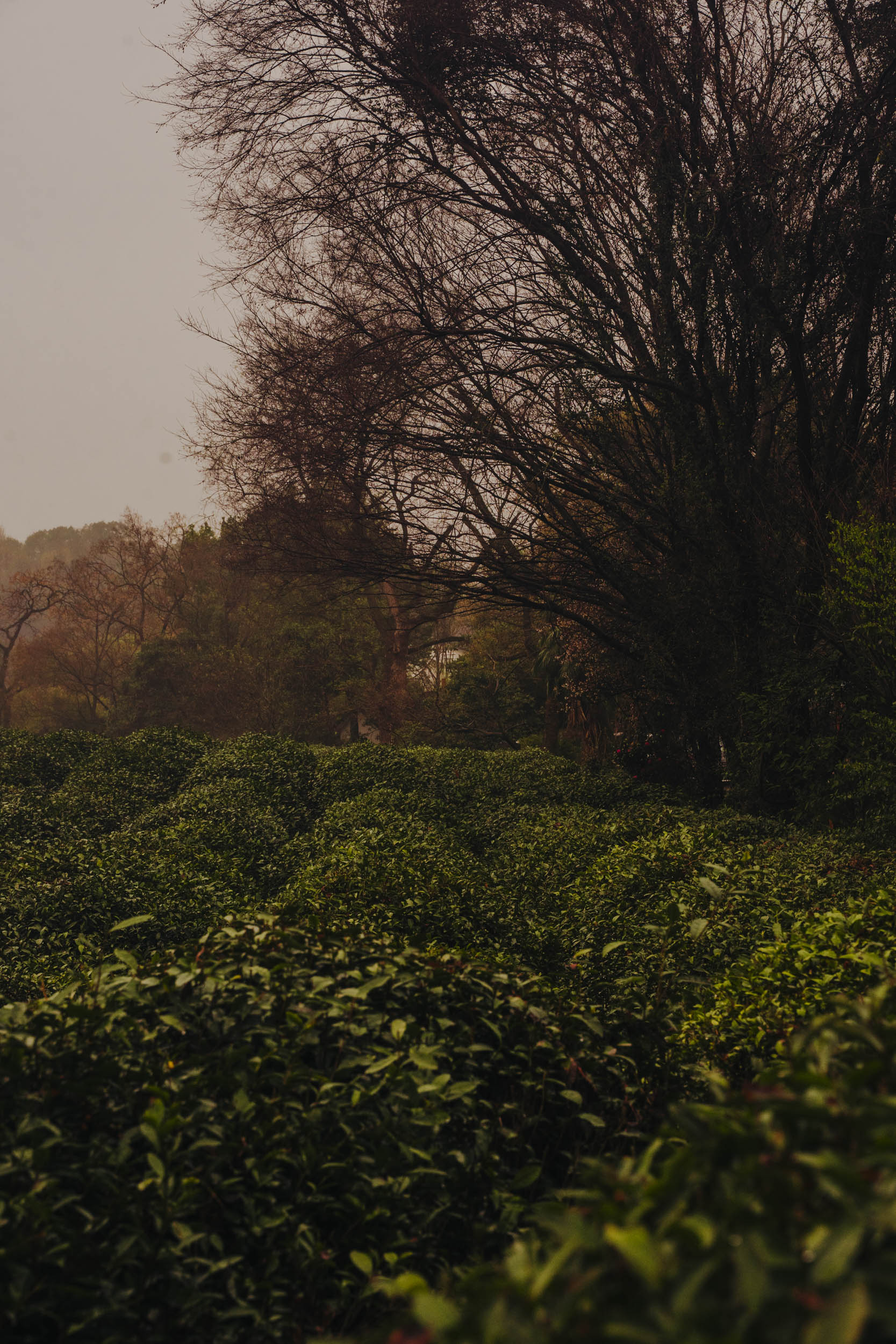
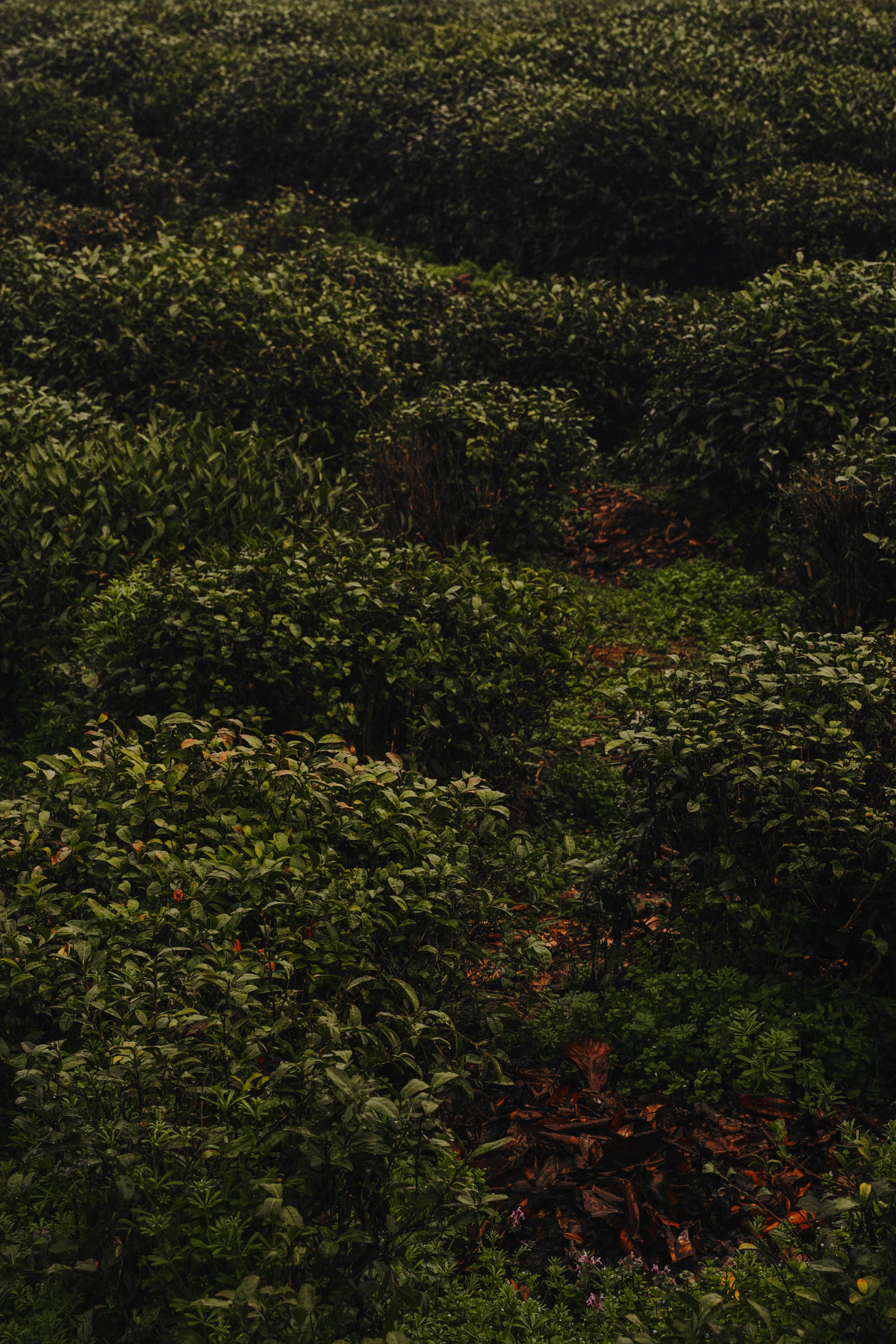
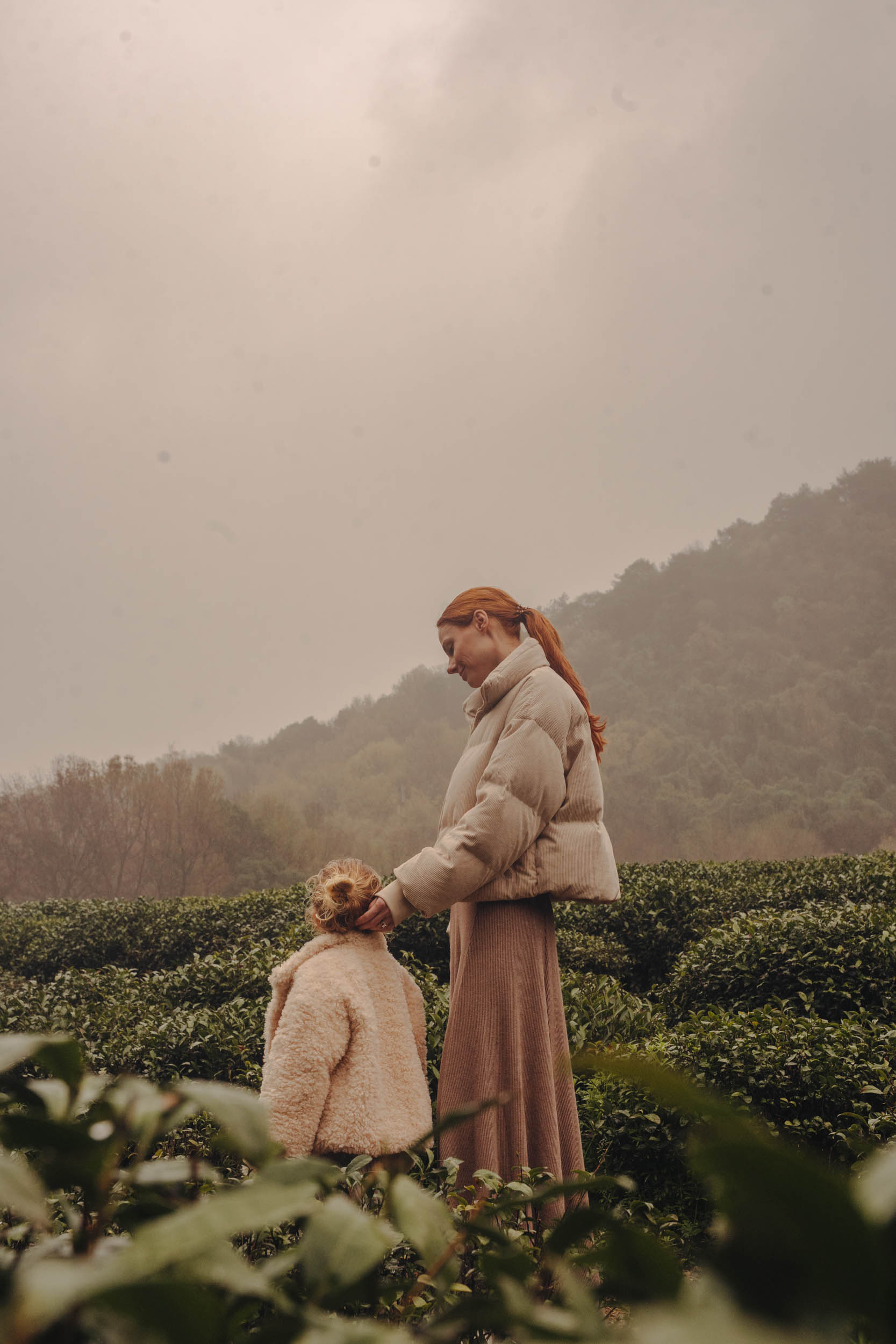
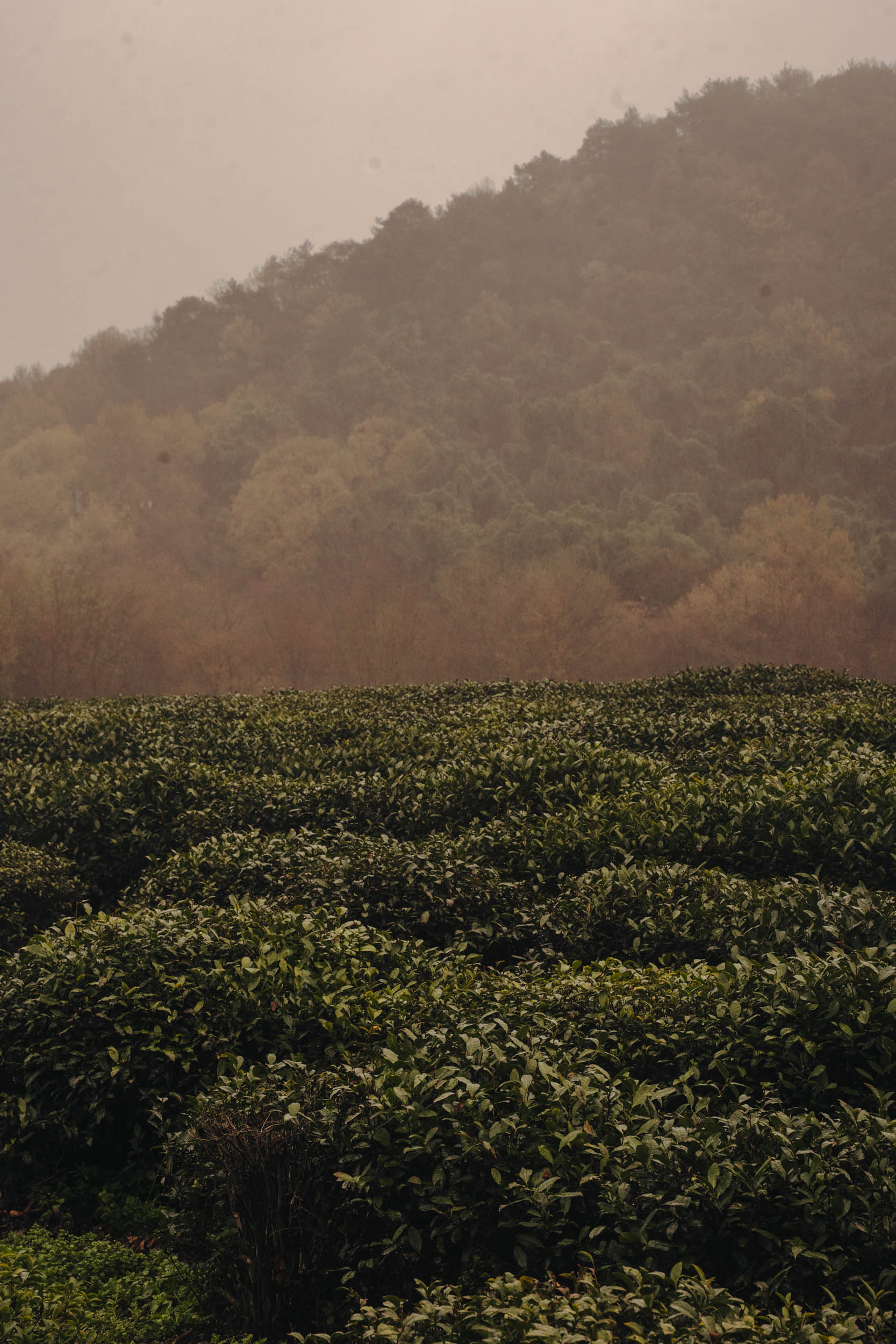
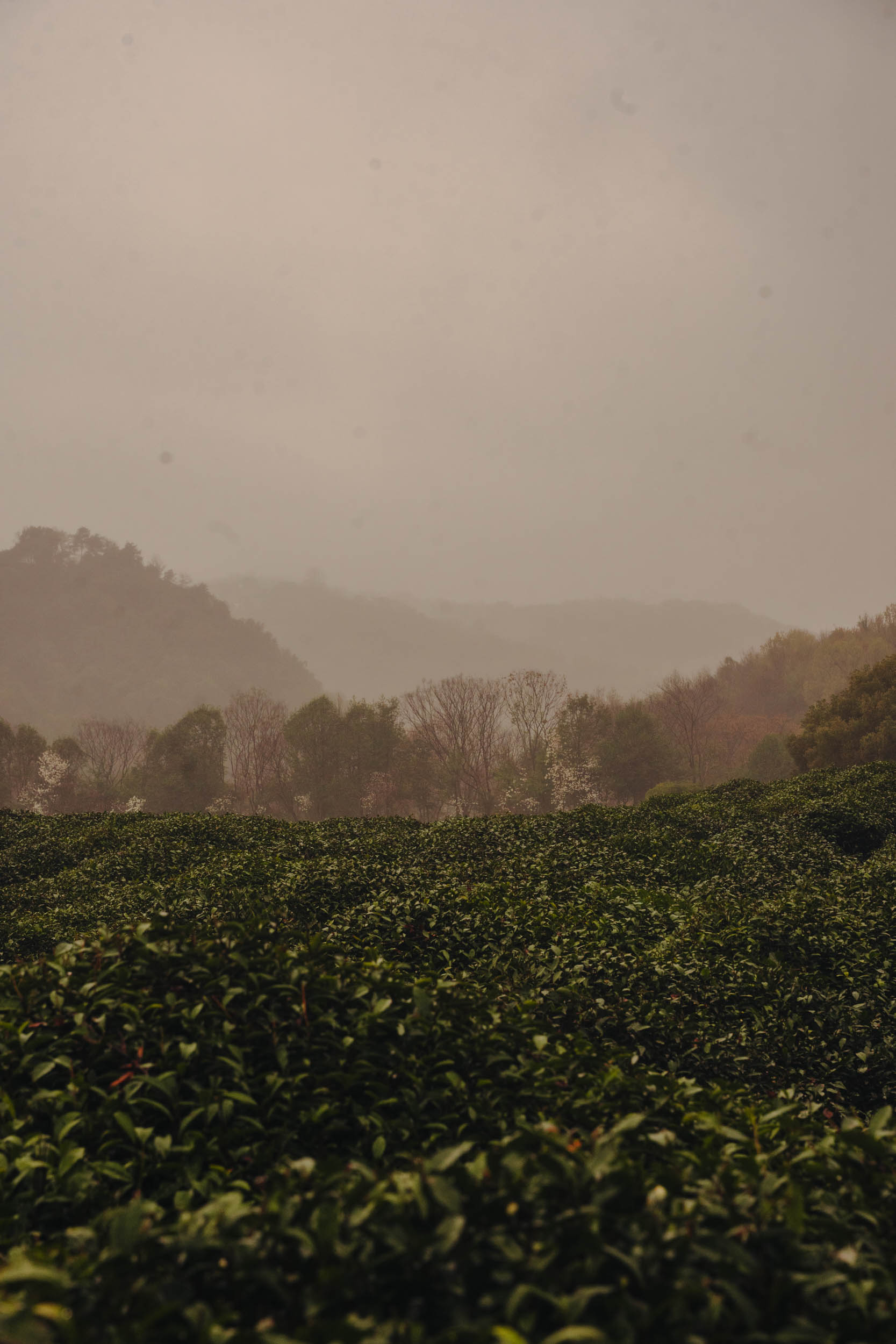
Beyond West Lake, Hangzhou also boasts some of the best tea in all of China. Longjing tea, which is grown in the tea fields west of West Lake, is a very earthy, slightly bitter yet delicious tea. It quickly skyrocketed to one of my favorite teas, although to be fair pretty much most tea in China is my favorite. For years I loathed tea and just couldn’t stand the taste of it until I moved to Asia and tried Chinese teas. I’ll never forget my first sip of Pu’erh tea, which was my introduction to Chinese tea, and soon I was eager to try more. Now I am obsessed, so it should come as no surprise to any of my friends in Hong Kong that I was eager to try longjing tea.
Despite it being a rainy morning, we drove out to the tea fields just 5 minutes away from the shores of West Lake and found ourselves closer to the mountains, with rows upon rows of tea fields all around us. Little bean knows I love tea, and she loves to pretend to make me tea, so when I showed her the longjing tea leaves I could see her start to piece together about where mommy’s tea comes from. Some of the best tea fields and tea experiences in Hangzhou are a bit further out from the city, but if you visit the China Tea Museum it’s a bit closer to West Lake and features so many tea fields you can wander through.
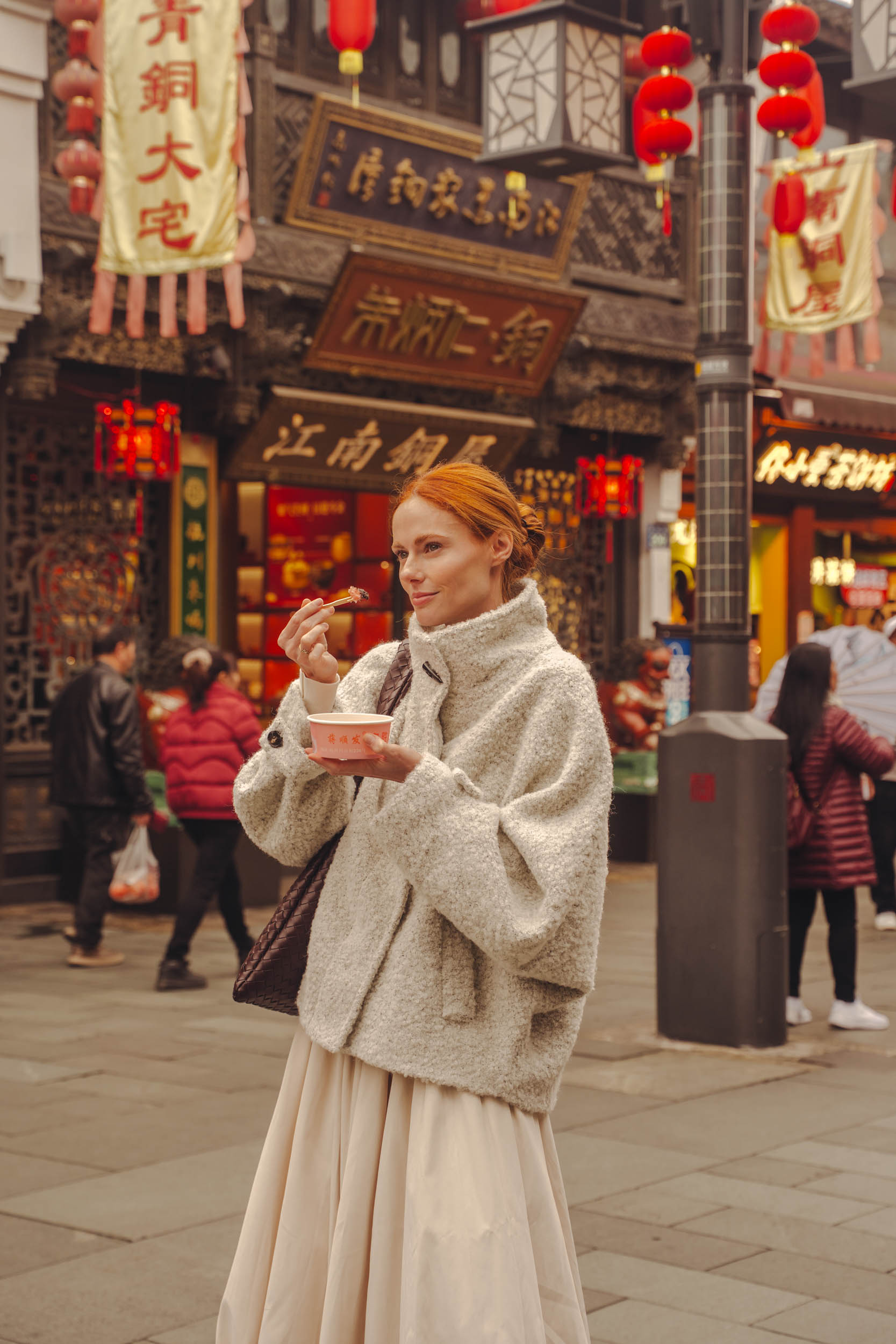
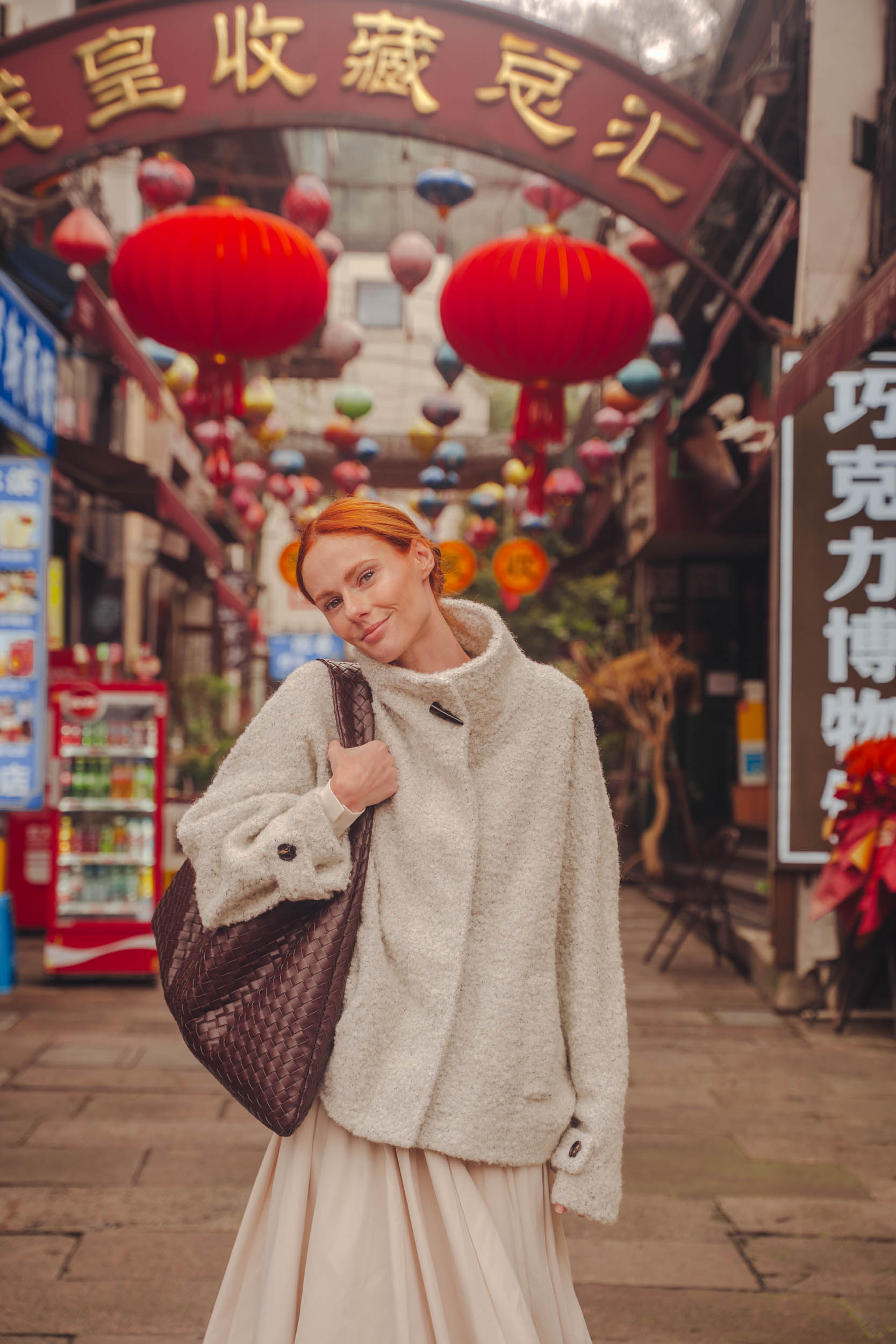
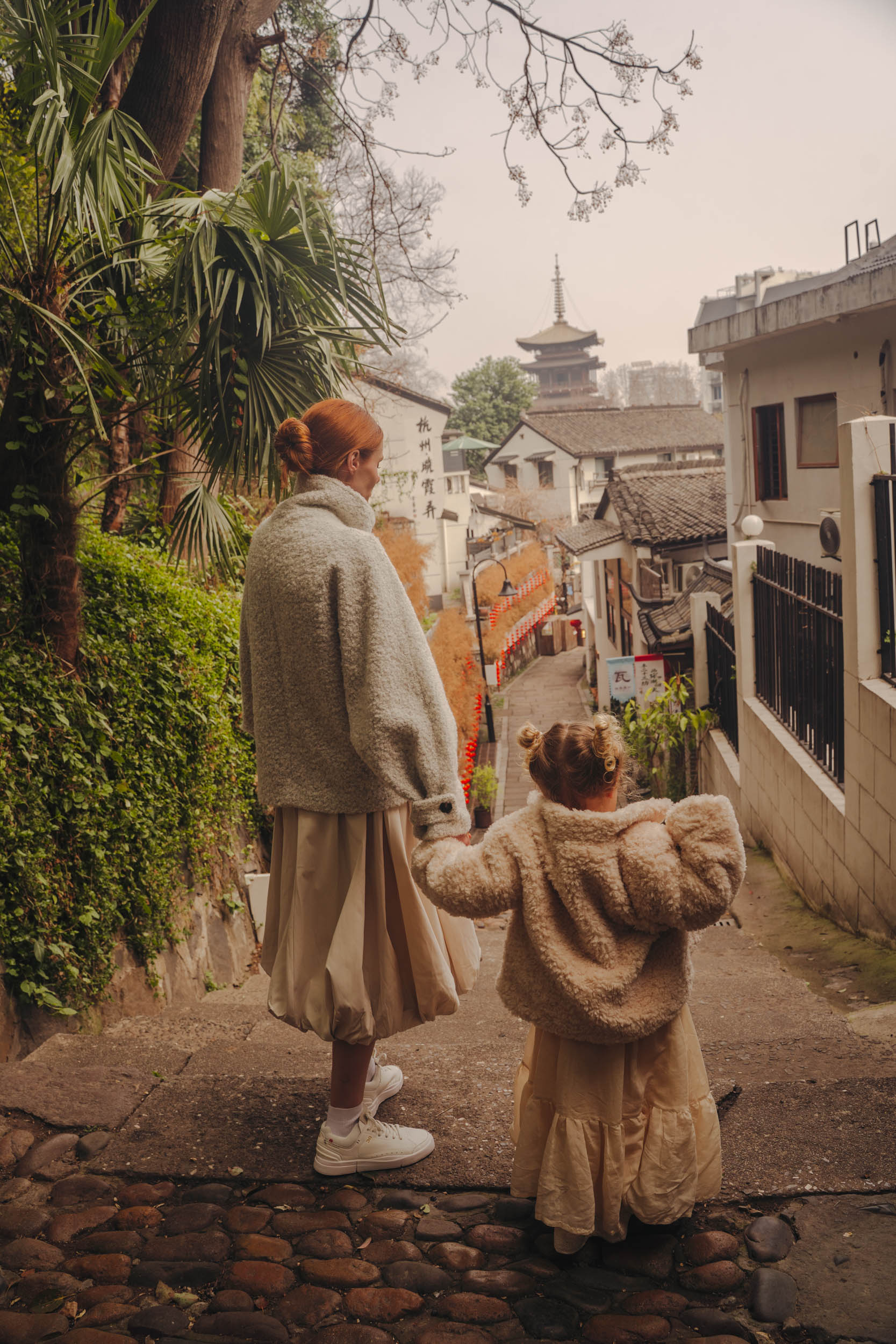
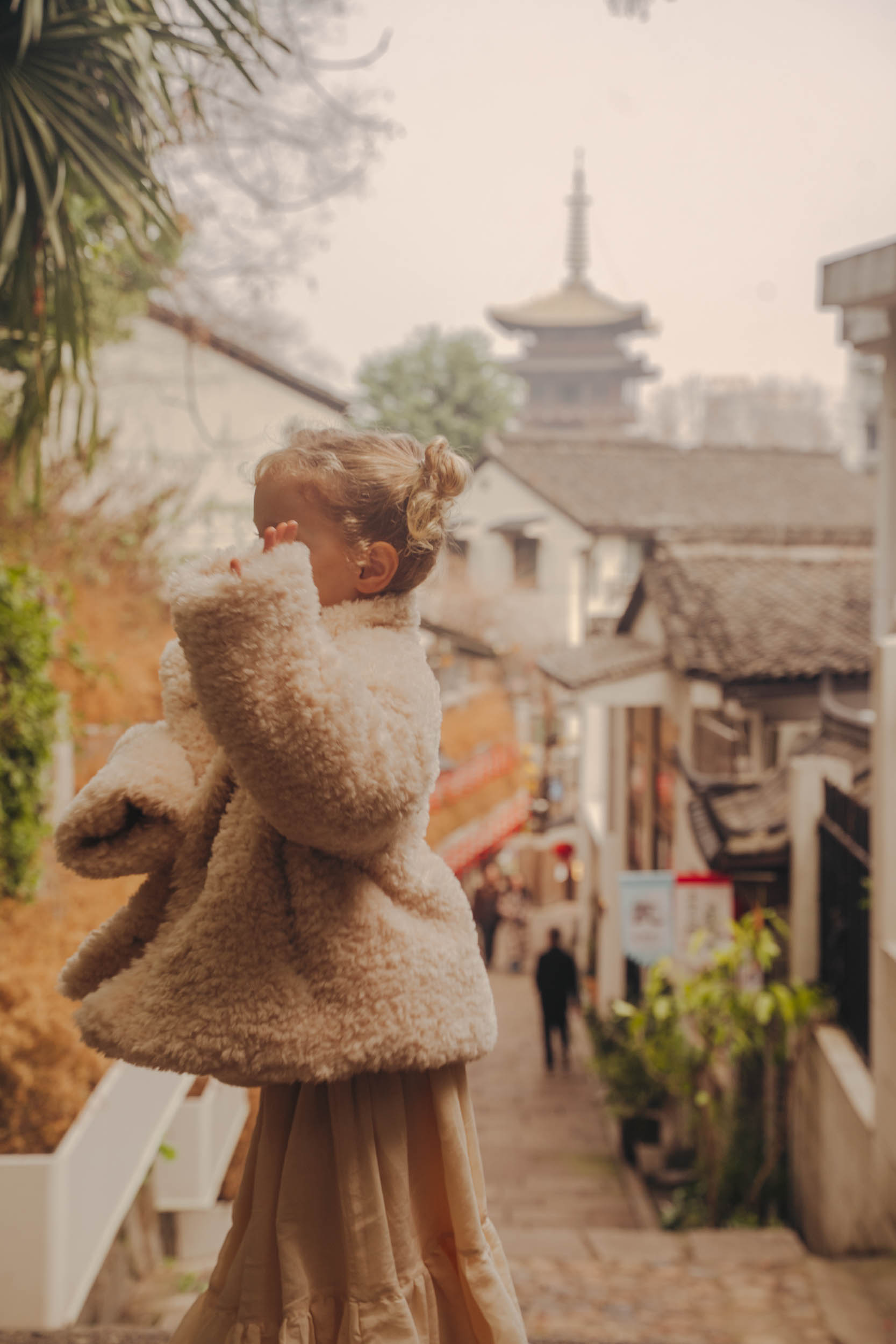
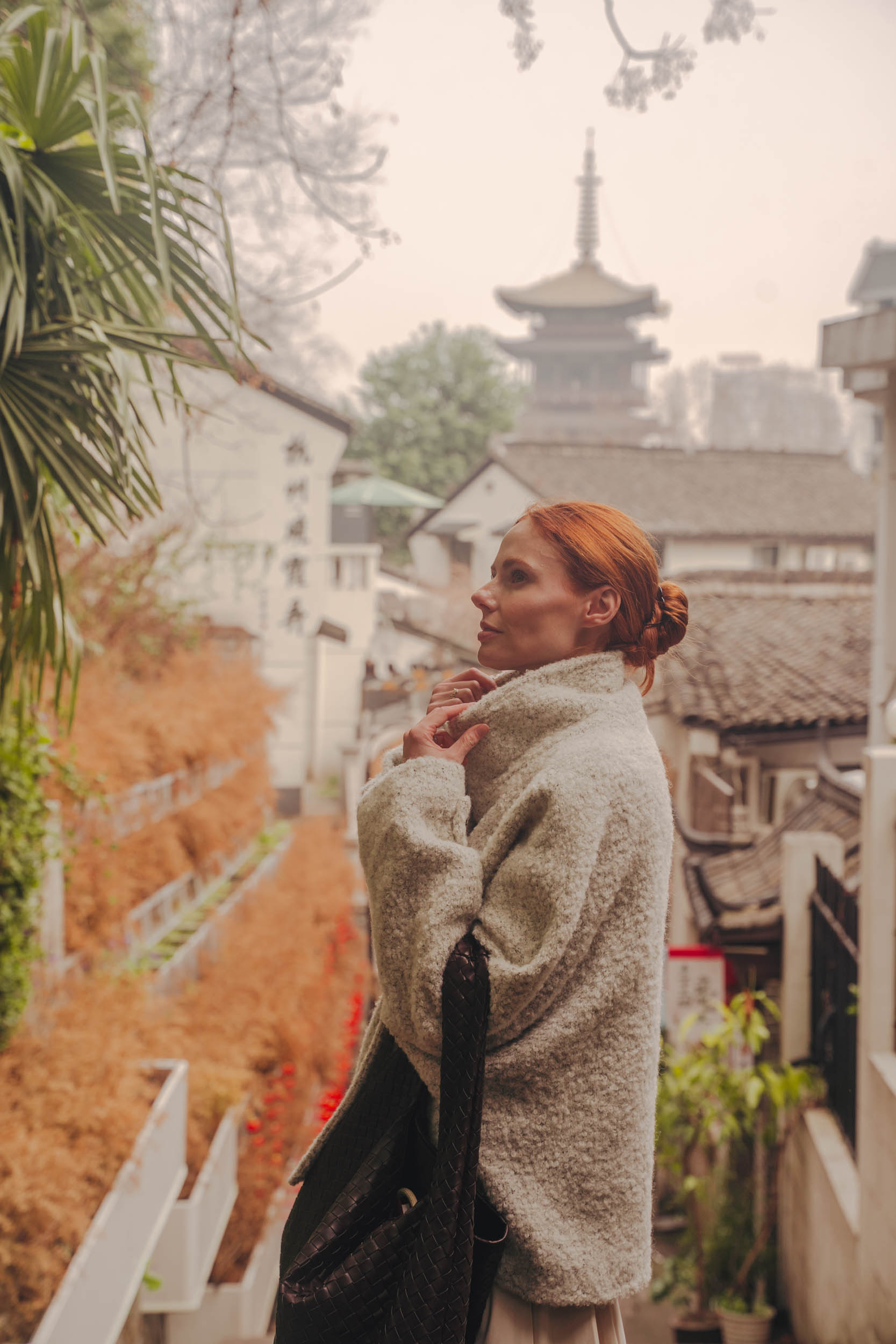
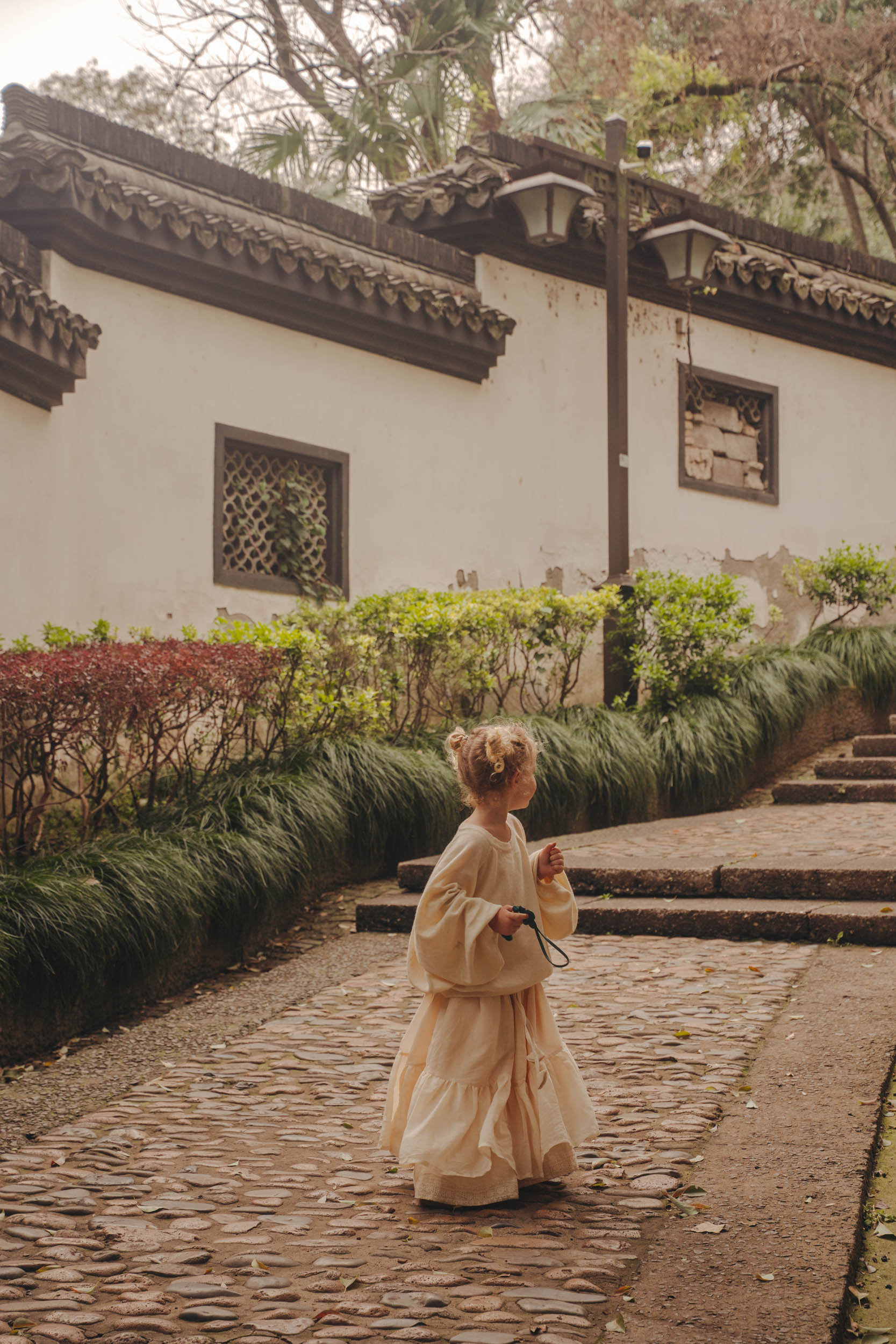
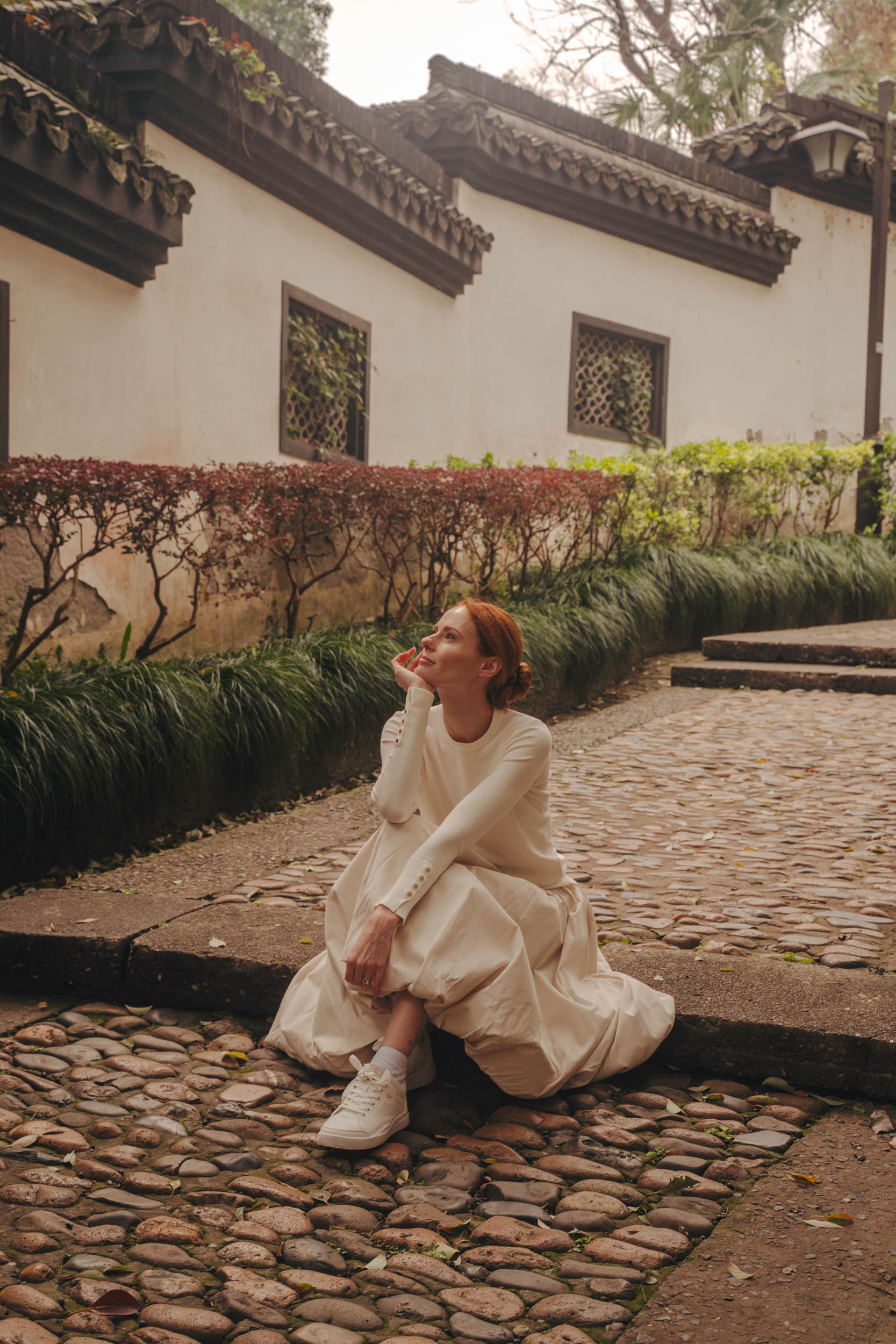
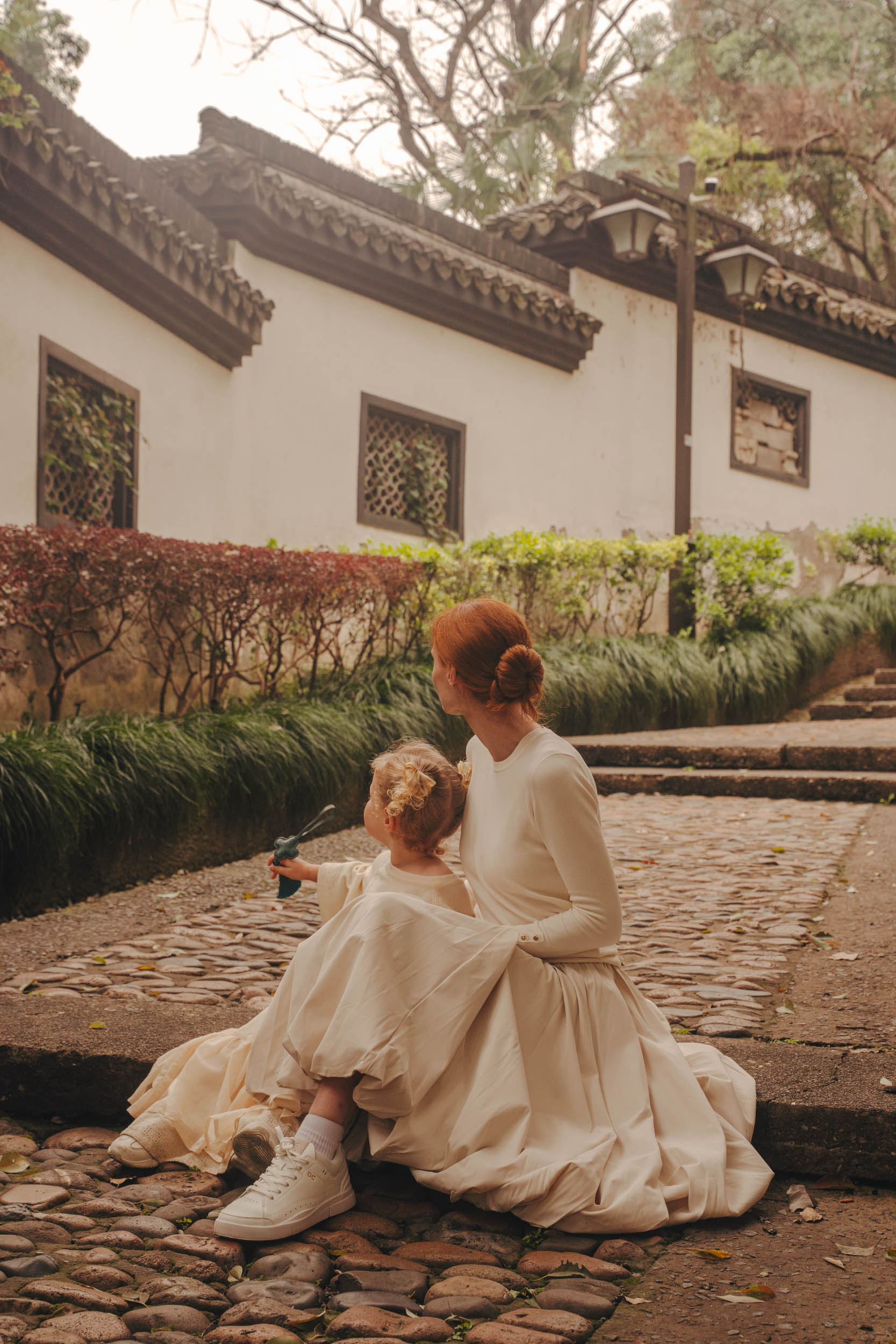
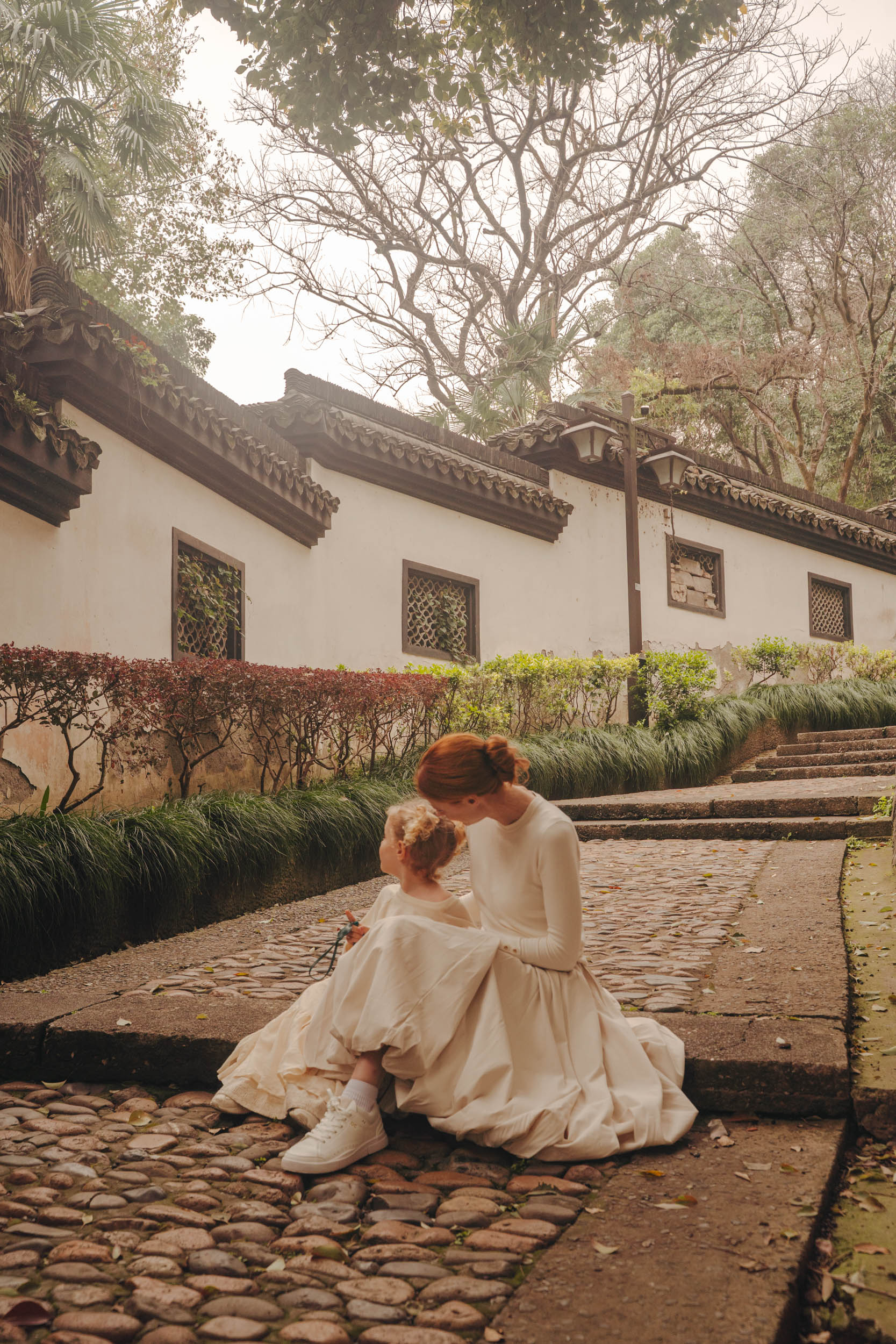
Of course we cannot travel to Hangzhou without venturing into the city itself. While West Lake is dreamy and absolutely relaxing, Hangzhou city has a lot to see and do in it as well. We started our city adventure on Hefang Street, a pedestrian-only street that features a plethora of street food, little shops selling spices and teas, and small cafes. It was here where I put my Mandarin to the test and ordered a dingshenggao, or victory rice cake, entirely in Mandarin. Dingshenggao is made of glutinous rice and is typically pink. It is a Hangzhou treat that people usually eat for good luck or good fortune. As I was celebrating my 36th birthday at the time, I took that as the perfect time to wish myself some good luck for my 36th year.
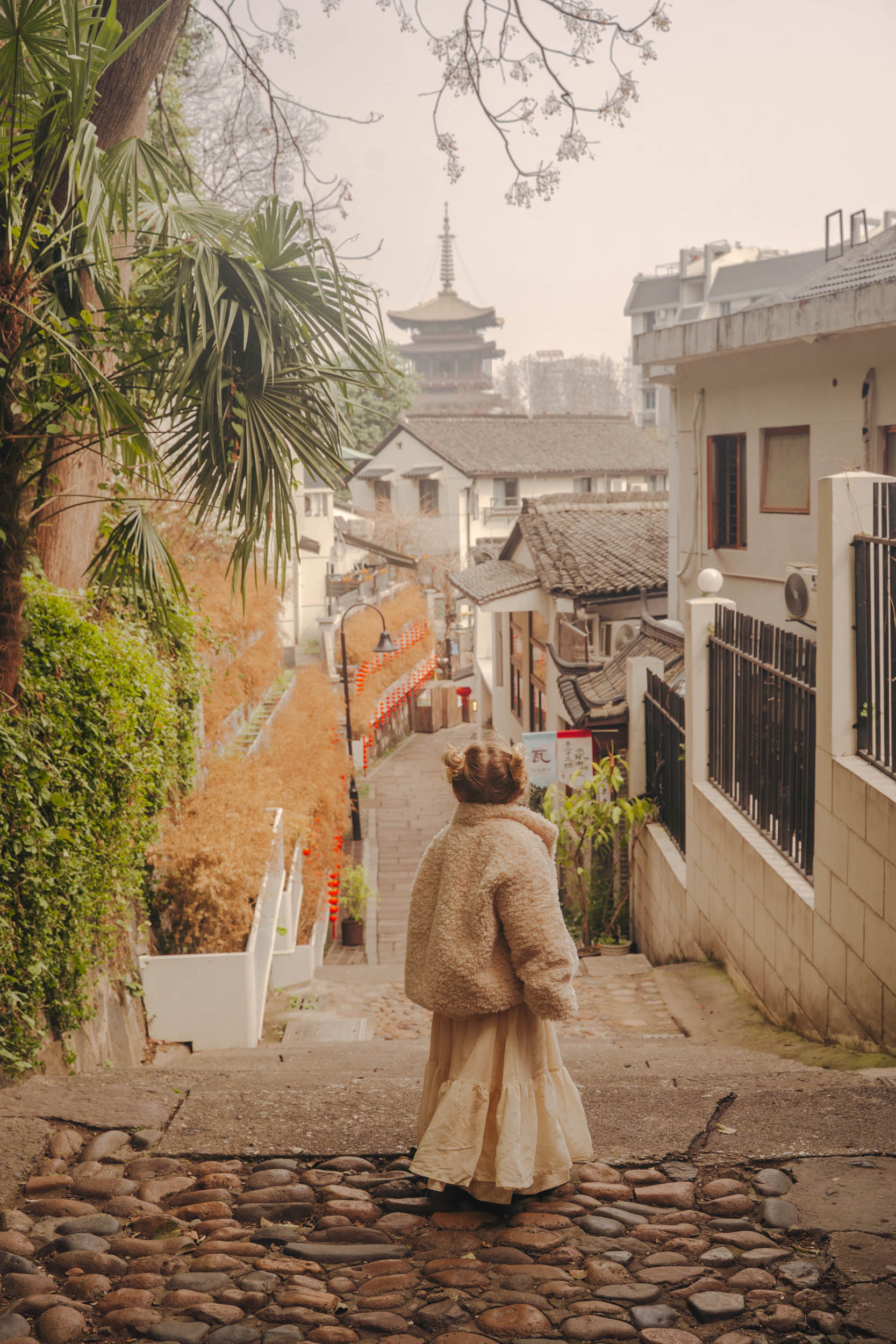
While little bean took a quick 15-minute nap in her stroller, we strolled down Dajing Lane which is home to more aesthetically pleasing coffee shops and Chinese fashion stores. I was extremely tempted to step into every fashion shop we saw, but I’ll just have to come back when I don’t have a sleeping toddler. We then turned onto Xiaoxianong, an alleyway that leads up several staircases towards Wushan Hill. In hindsight, we probably should have turned back towards Hefang Street and gone up the smoother path instead, but honestly these stone staircases were beautiful and it felt like we were literally stepping through history.
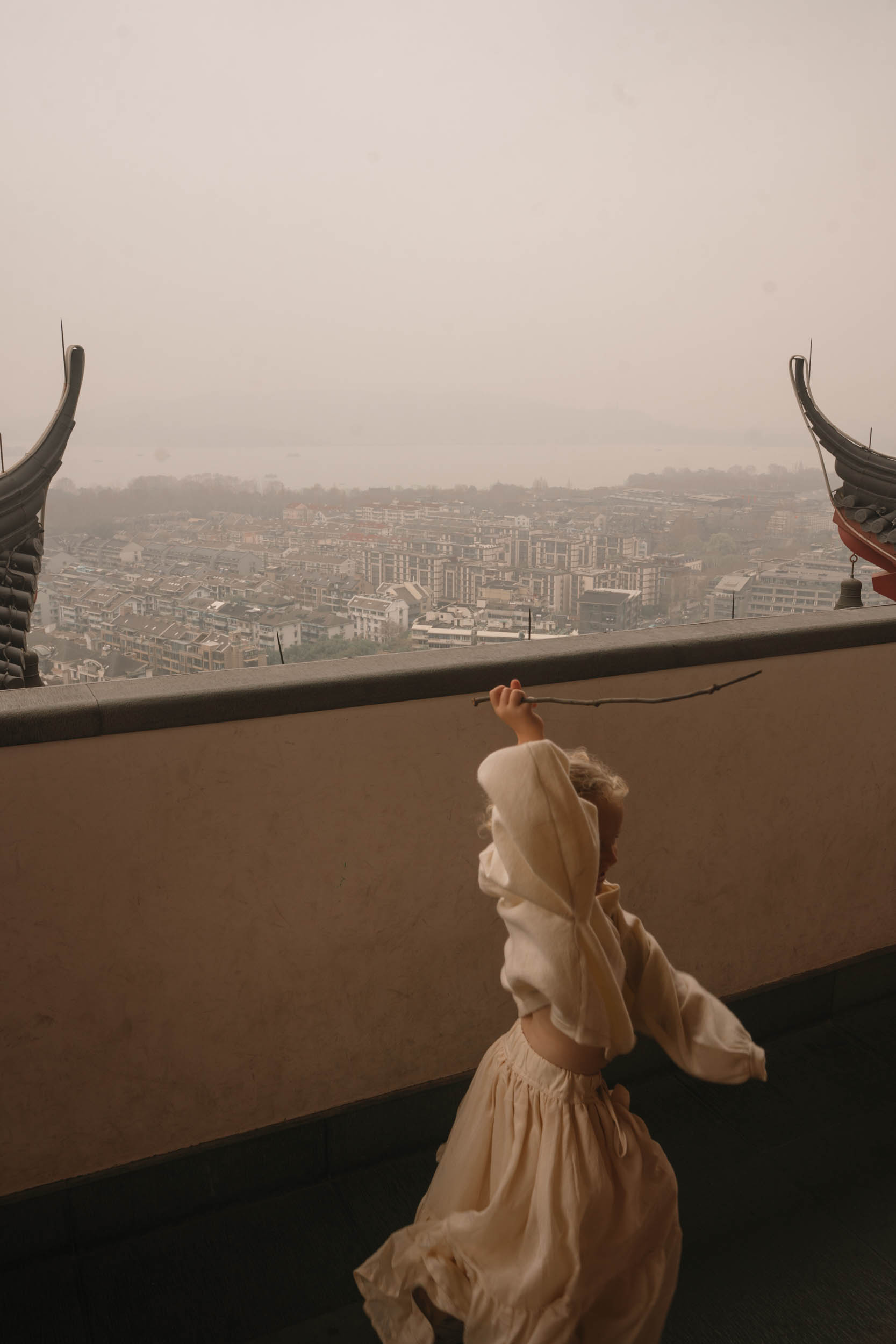
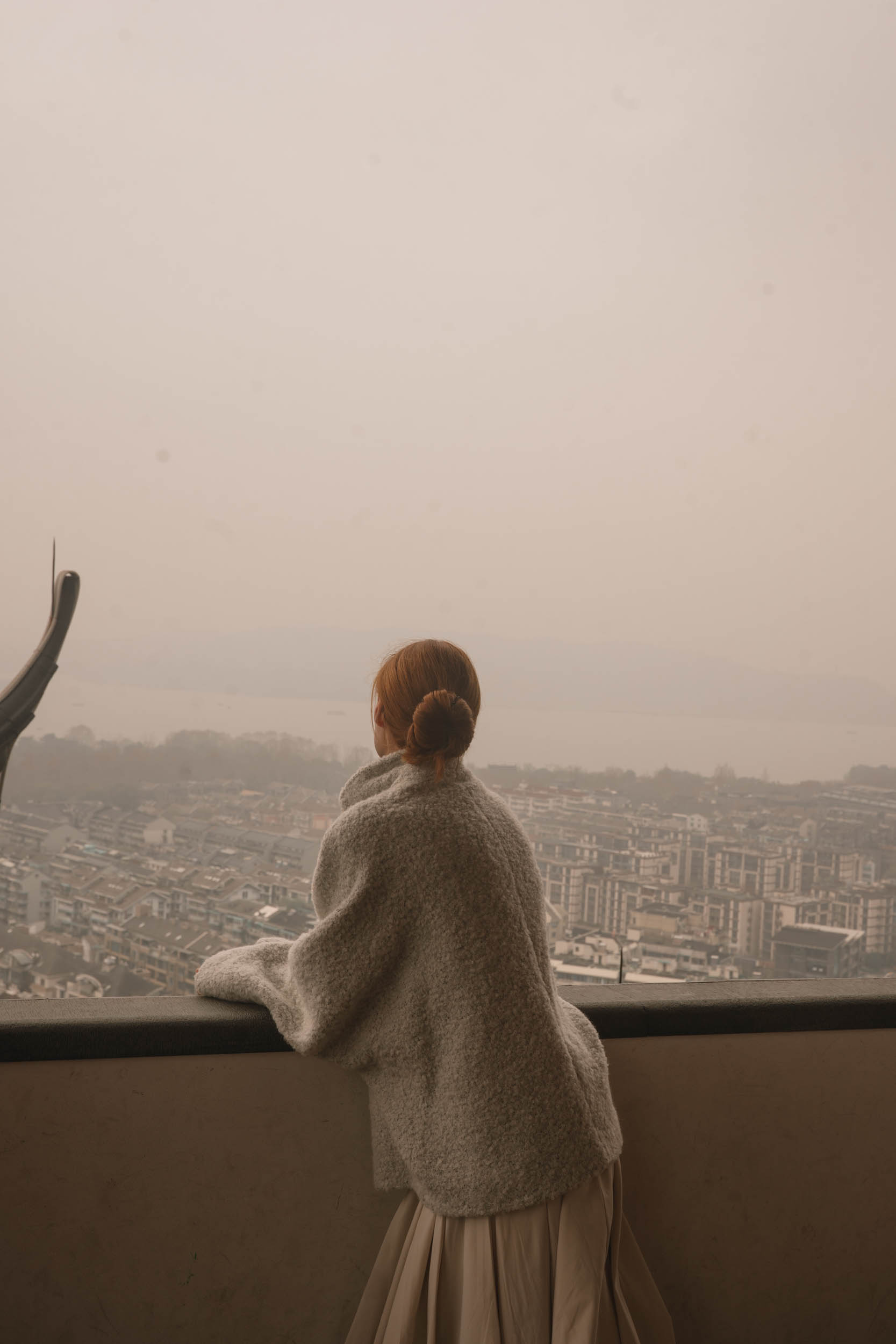
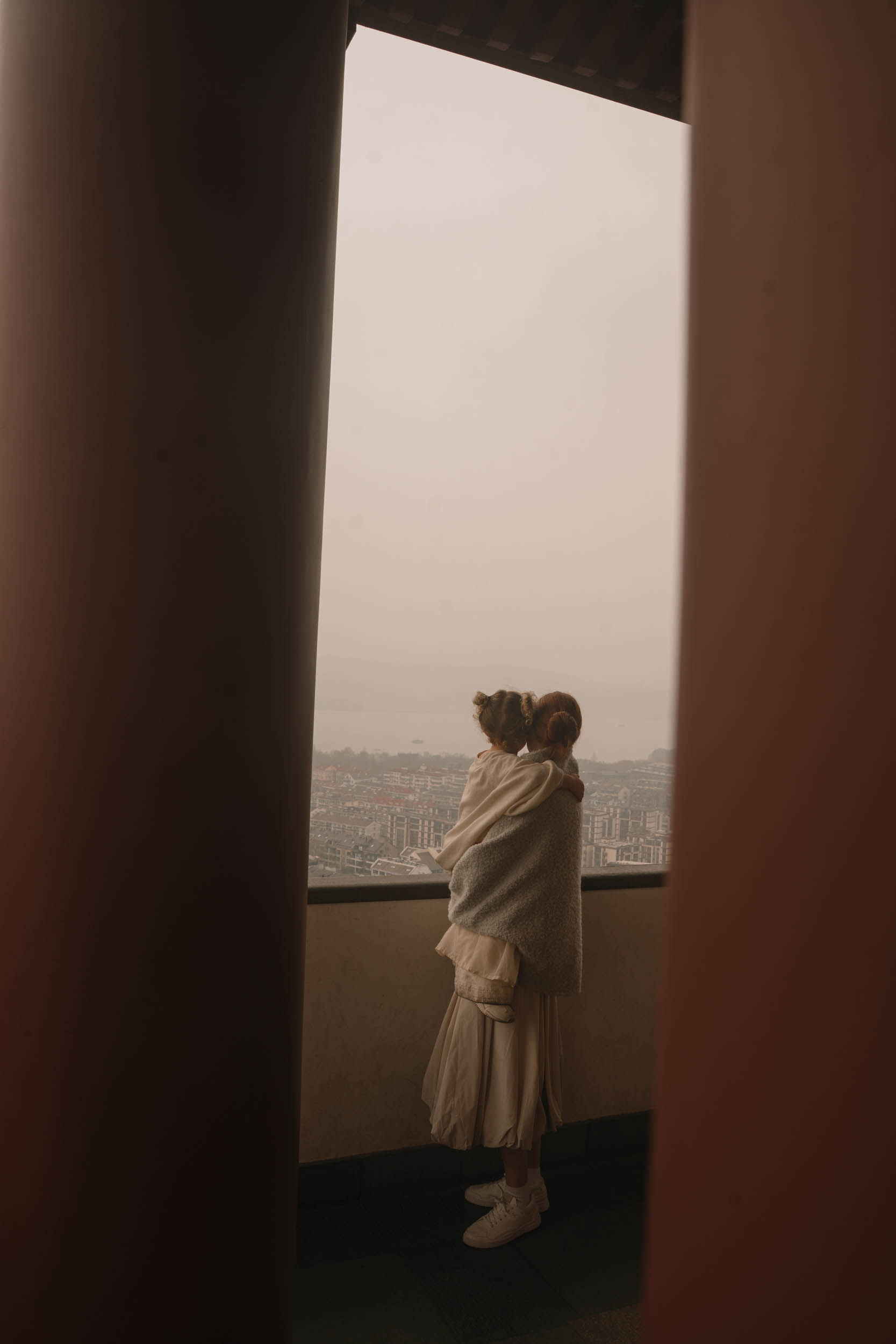
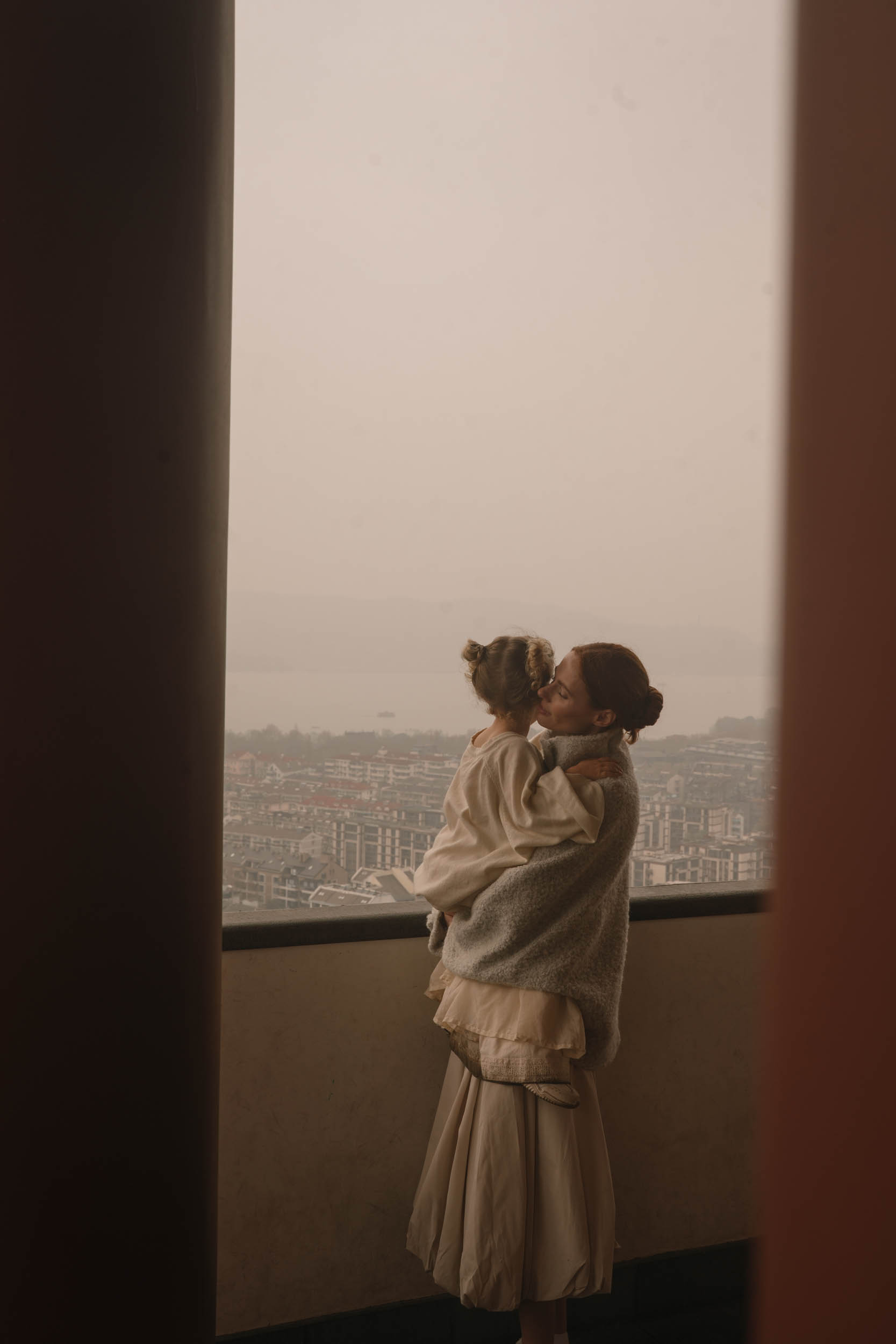
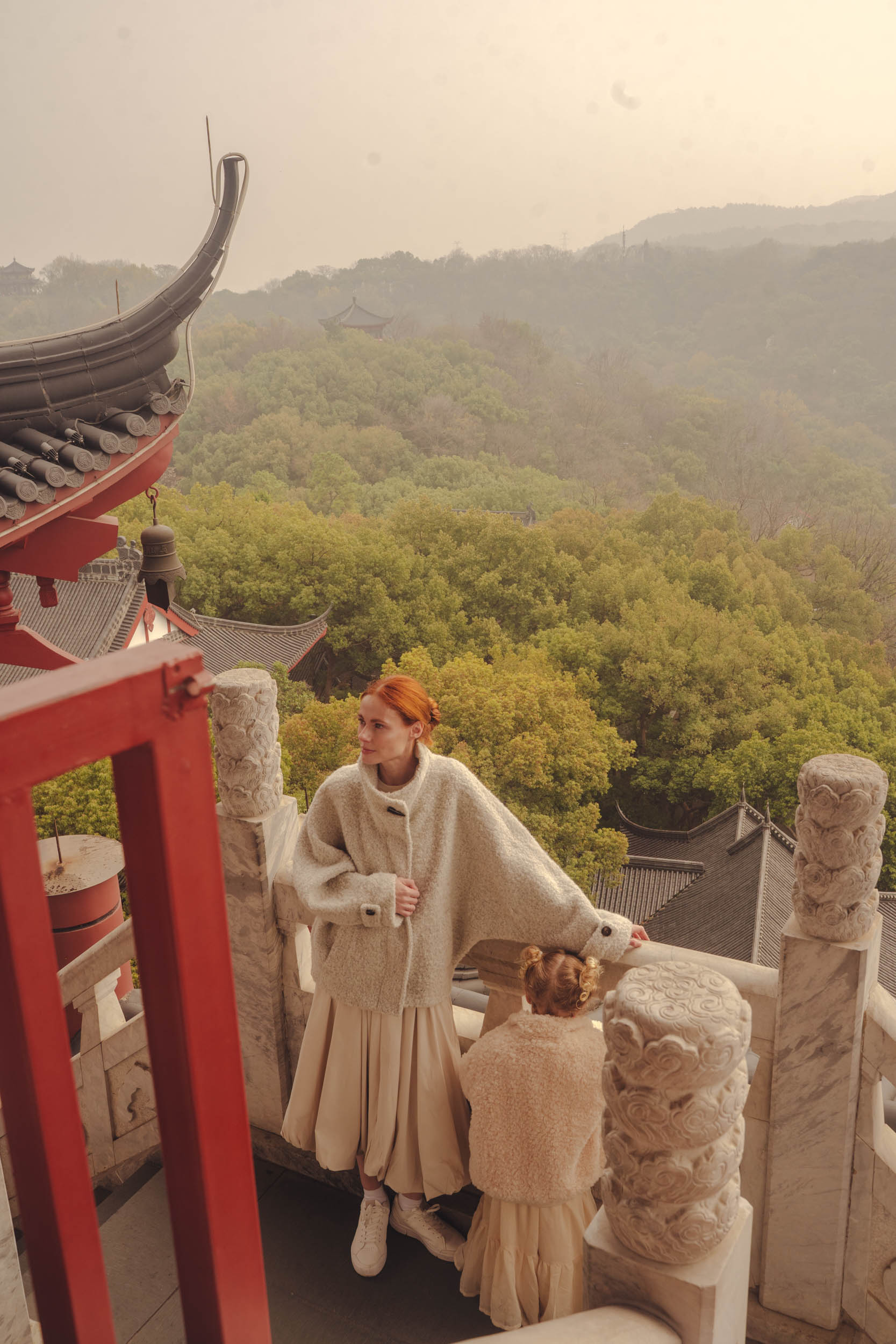
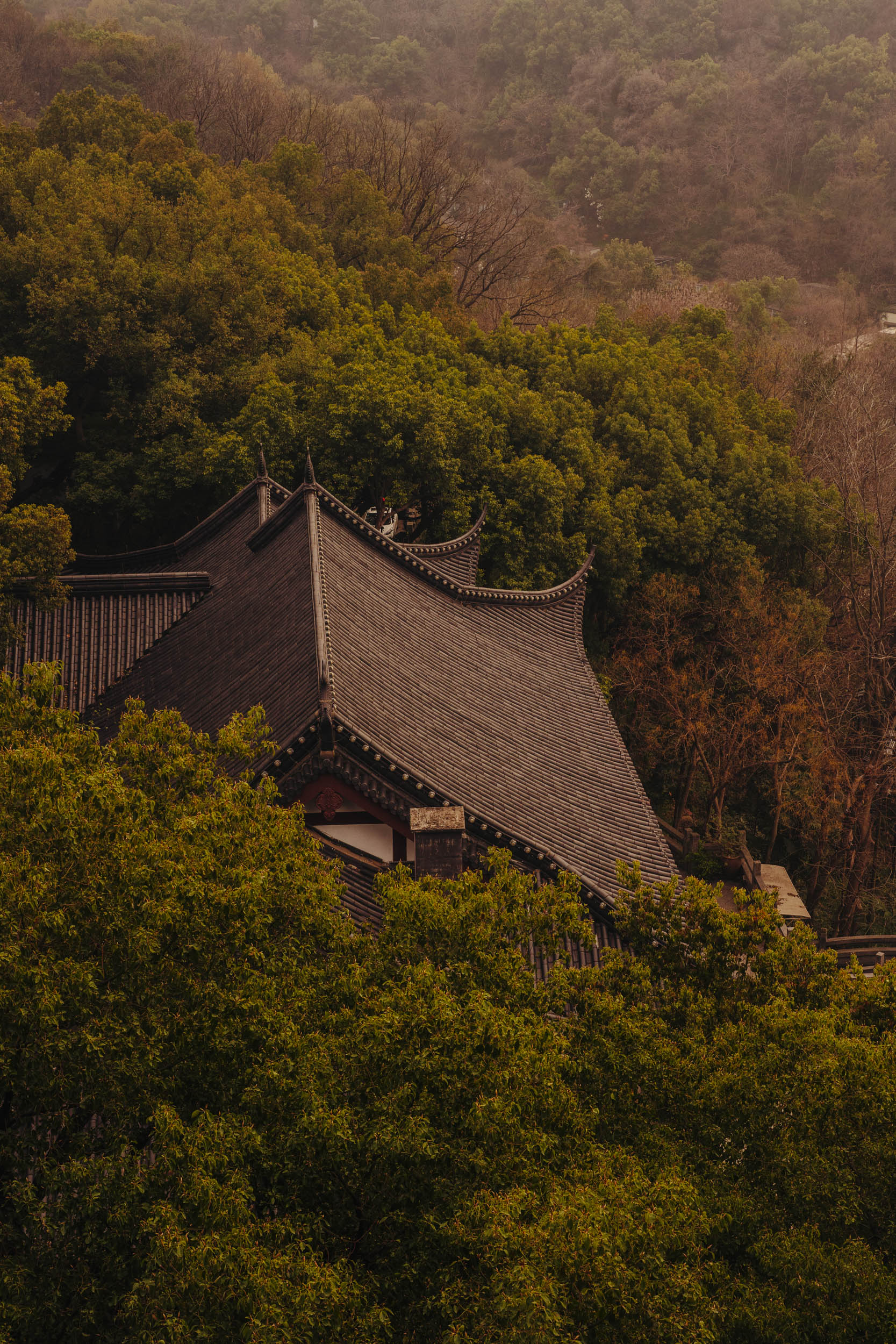
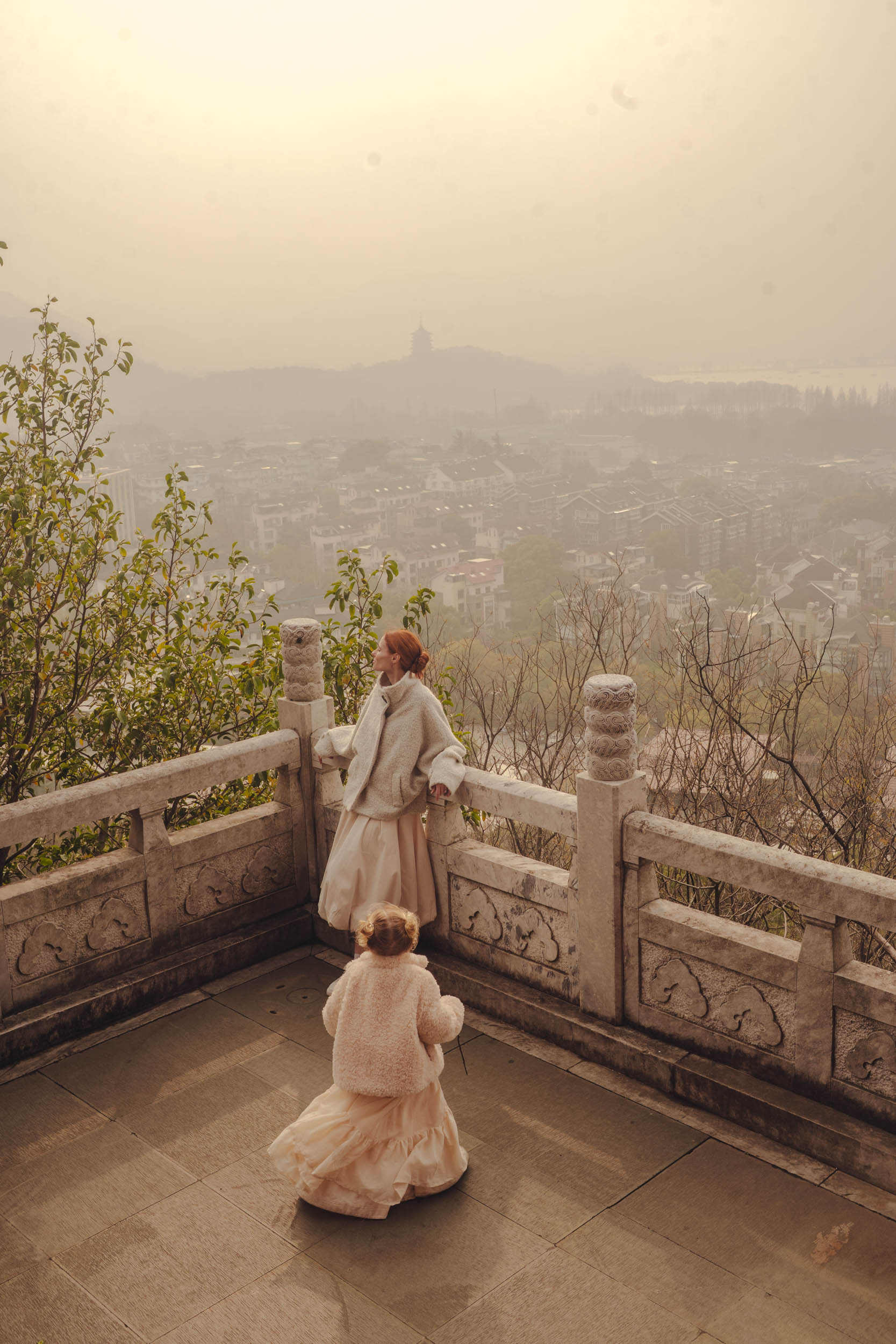
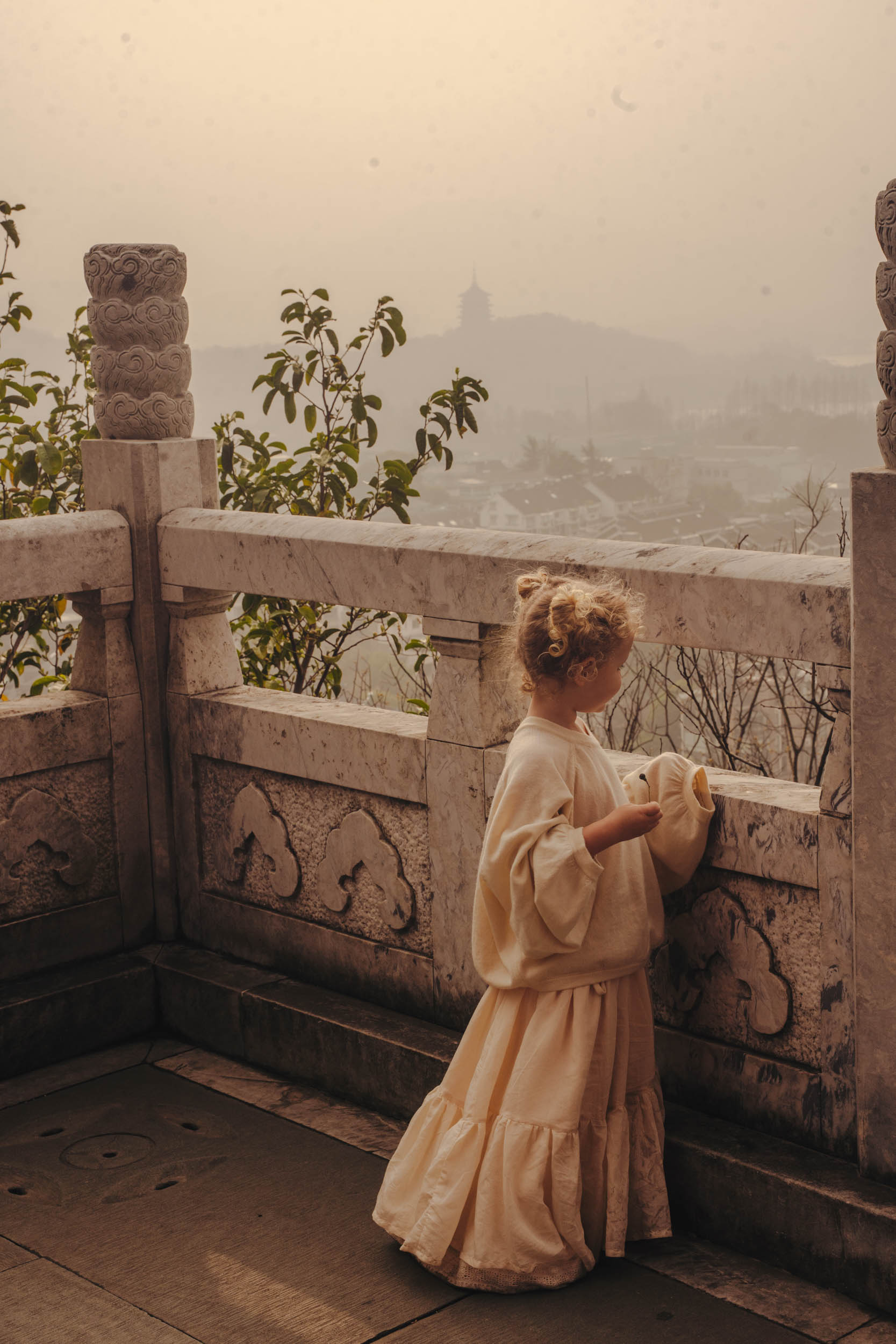
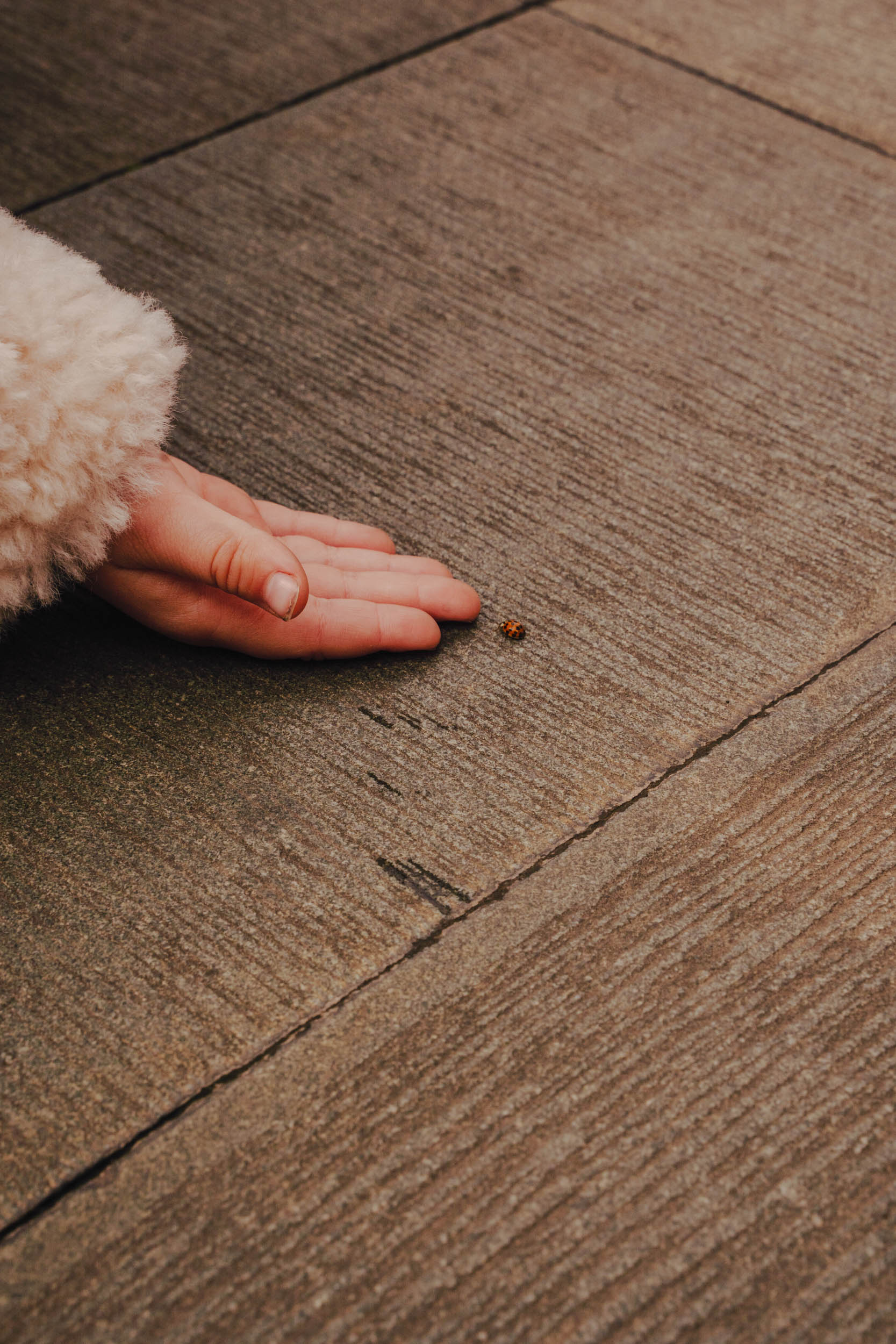
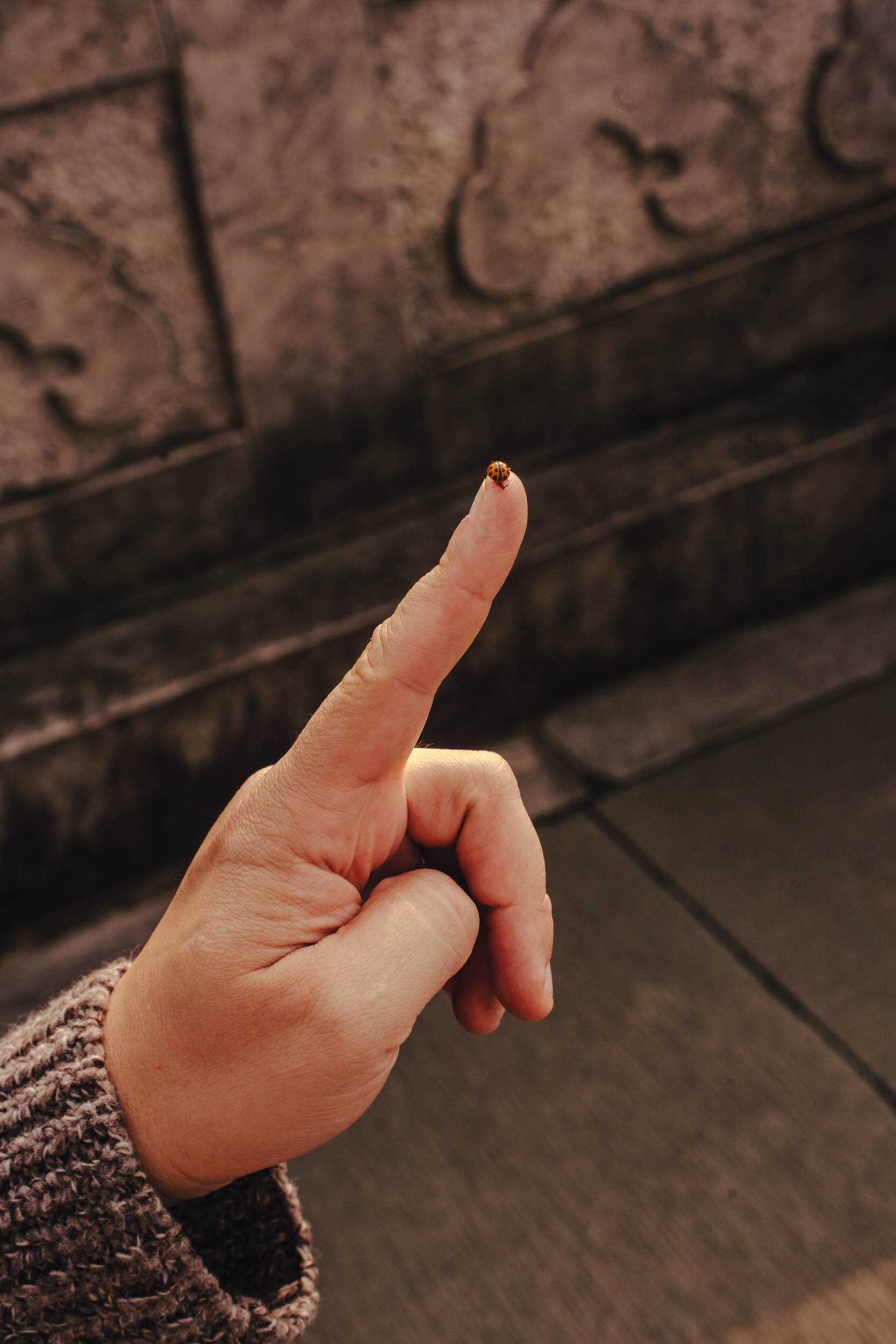
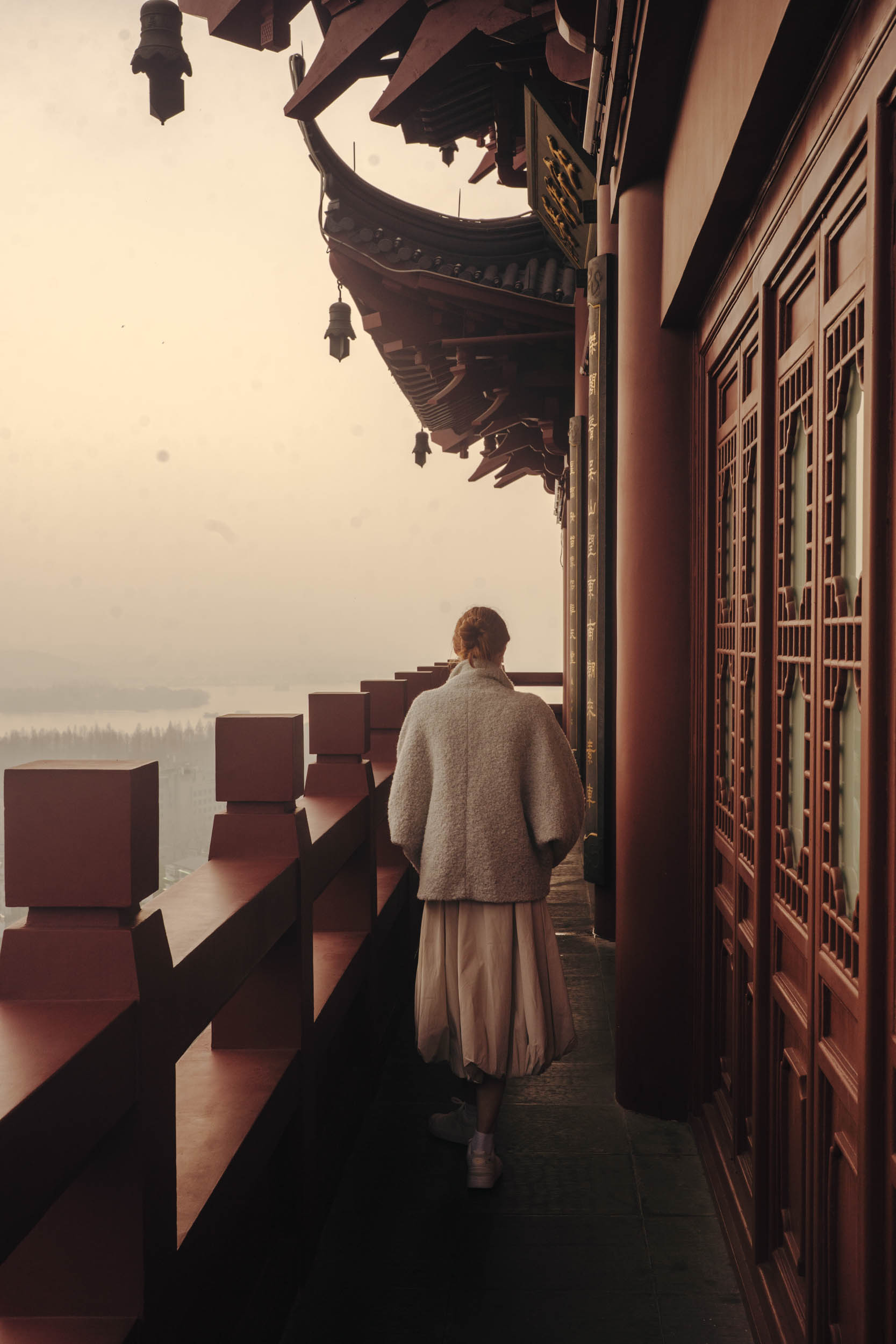
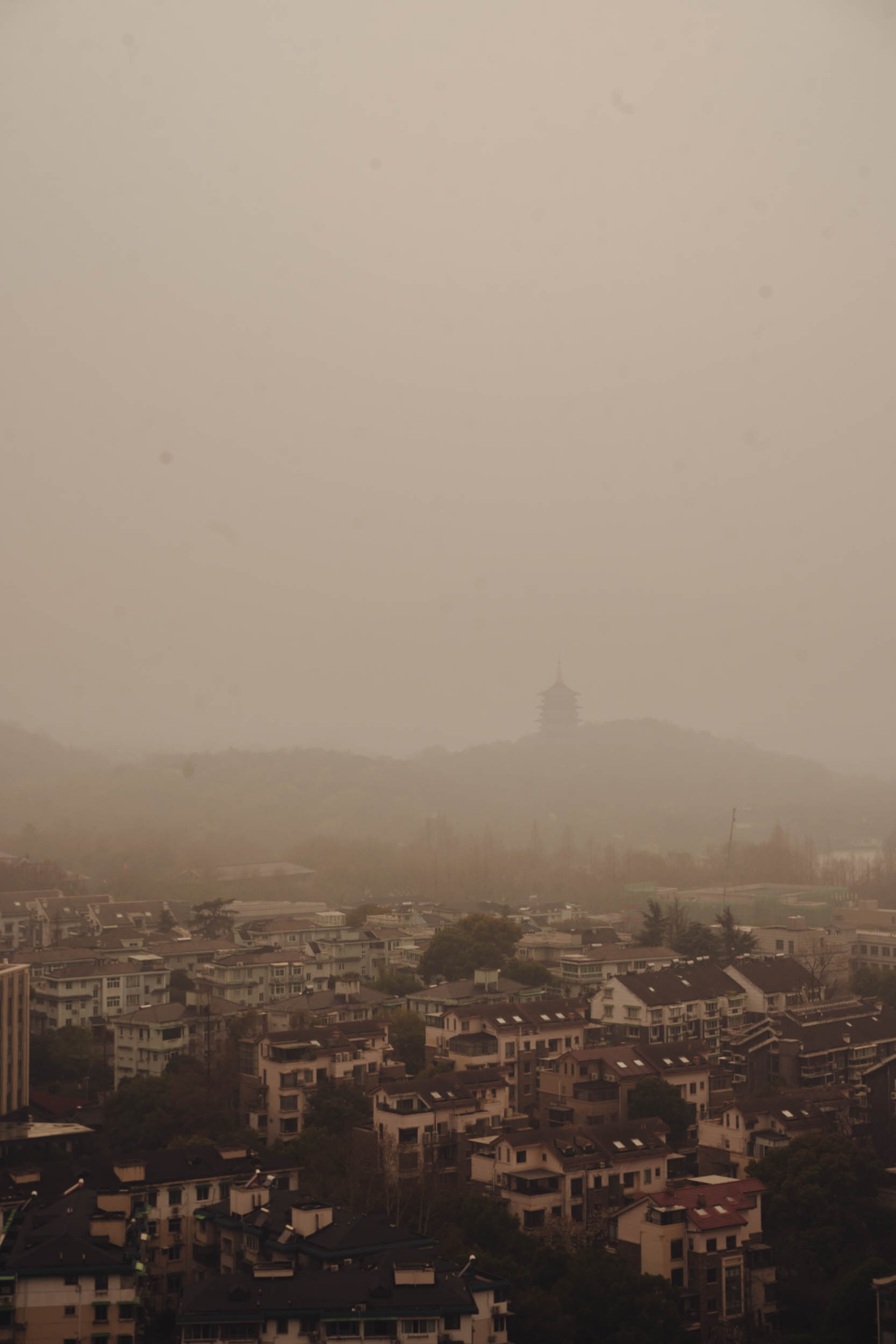
At the top of Wushan Hill is the City God Pavilion, which is one of the tallest structures in Hangzhou. It’s also not quite as popular as Leifang Pagoda by the West Lake, however it gives one of the best bird’s eye views of Hangzhou and West Lake in the entire city. From up top, we can see the entirety of West Lake, most of Hangzhou itself, and even Leifang Pagoda in the distance. Its architecture is inspired by the Ming and Yuan dynasties, and boasts several floors with numerous viewpoints. For those traveling with a stroller like us, it does have an elevator inside that can take you 5 floors, although you’ll have to climb a small staircase up to the 6th floor. While little bean was fascinated at being able to see so much from high up, it was the pavilion’s notorious ladybugs that really caught her attention. While I admired the view, little bean happily placed ladybugs on her fingers and giggled gleefully.
While this may already seem like a lot for one city, there’s still more of Hangzhou that we did not get to see. While it was in our view every single day, we never made it to Leifang Pagoda or Taiziwan Park for cherry blossoms. We did attempt to visit Lingyin Temple, however due to a public holiday it was packed to get there and not something we wanted to get stressed over. It just means we will need to return again soon to visit the spots we did not get to.
Hangzhou was the perfect first stop for me in mainland China. I had always assumed it would be Shenzhen, or Shanghai, or even Beijing, but I am really glad my first visit was to one of the most romantic and inspirational places in China. I am excited to see and learn more about Hangzhou, and I am already counting down the days until I can return again.
Hangzhou is a quick 48-minute high speed train ride to/from Shanghai, so it’s very easy to add it on to your Shanghai trip as we did. We stayed at The Silk Lakehouse on the northern shores of West Lake.